How Local Conditions Play In
Most of the houses we get called to in Opelika went up between 1965 and 1991, with the median landing around 1976. That matters because doors on houses built before insulation rules often used thinner panel stock and hardware sized for lighter doors than what's sold today. When a homeowner swaps in a heavier insulated replacement panel without checking the spring rating, the opener strains and the torsion spring wears out faster than it should.
Opelika sits in a mild climate with occasional freeze, so we're not dealing with the extreme temperature swings that crack seals or warp wood doors the way you'd see further north. But that occasional freeze still matters for steel track alignment - a track that's a quarter-inch off doesn't show it in July, and then a cold snap tightens tolerances just enough to make a roller bind or a cable jump the drum. We see more of these calls in the weeks after a cold front than any other time.
The eight named areas across the service footprint share this same 1960s-70s stock, which means the same handful of recurring issues keep showing up on our schedule: original torsion hardware, steel doors without foam backing, and openers that have outlived at least one prior door.
The Cost of This Job
We're not going to quote a number here because job cost depends on what's actually wrong and what parts the door needs, and we don't want to put a figure in writing that doesn't match your door. What we can tell you is what drives the cost up or down in a town like this.
With median household income around $45,493 across the area, a lot of our customers are weighing repair against replacement carefully, and we'd rather have that conversation honestly than push a bigger job than the door needs. A broken torsion spring on an otherwise sound 1970s-era door is usually a straightforward repair. A door with a bent track, a worn-out opener, and a spring all failing at once starts adding up fast, and at some point replacement makes more financial sense than patching three separate problems on a 50-year-old frame.
Parts availability also plays into it. Original hardware from houses built in the 1965-1991 window isn't something every supplier stocks, so matching an old track bracket or a specific roller size can mean a short wait rather than a same-day fix. We'll tell you up front if that's the situation instead of guessing at a timeline.
What Is Going On
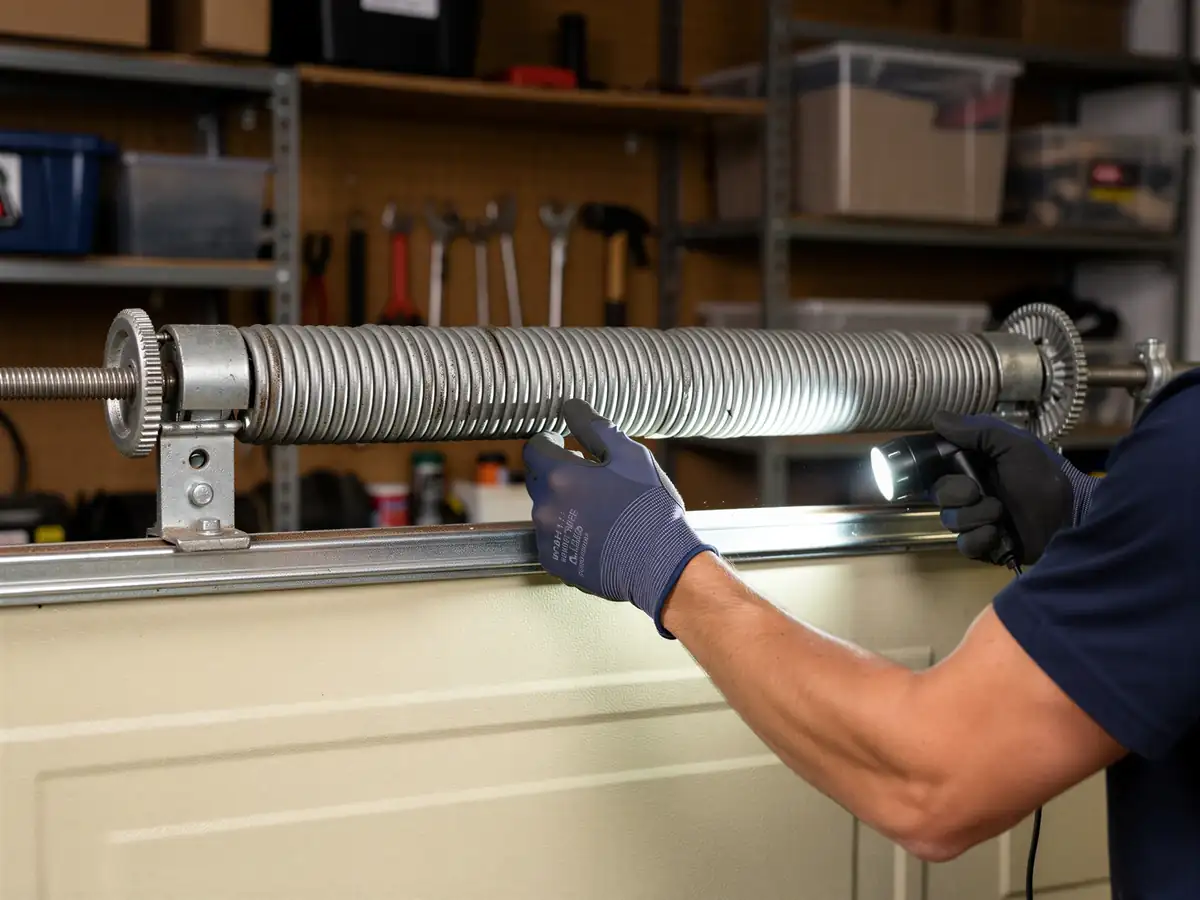
The most common call we get across the 6,300 owner-occupied houses in this area is a torsion spring that's reached the end of its cycle count
These are doors that have been opening and closing for decades, often with the original spring still on the shaft because nobody thought to replace it until it snapped.
- 6,300 owner-occupied
Second most common is opener trouble
Not the opener itself failing outright, but the opener straining against a door that's gotten heavier or stiffer over time as the track shifts slightly out of plumb. Houses from this era settled decades ago, so it's rarely dramatic movement, but a track that's drifted even slightly puts extra load on the opener's drive gear.
We also see a fair number of rollers that have worn down to the point where the door is noisy and rough on the track
Which is a maintenance item more than an emergency, but it's the kind of thing that turns into a bigger repair if it's ignored long enough. None of this is specific to one street or neighborhood - it's just what happens to doors and hardware that have been doing their job since the 1970s without much attention in between.
What to Look At First
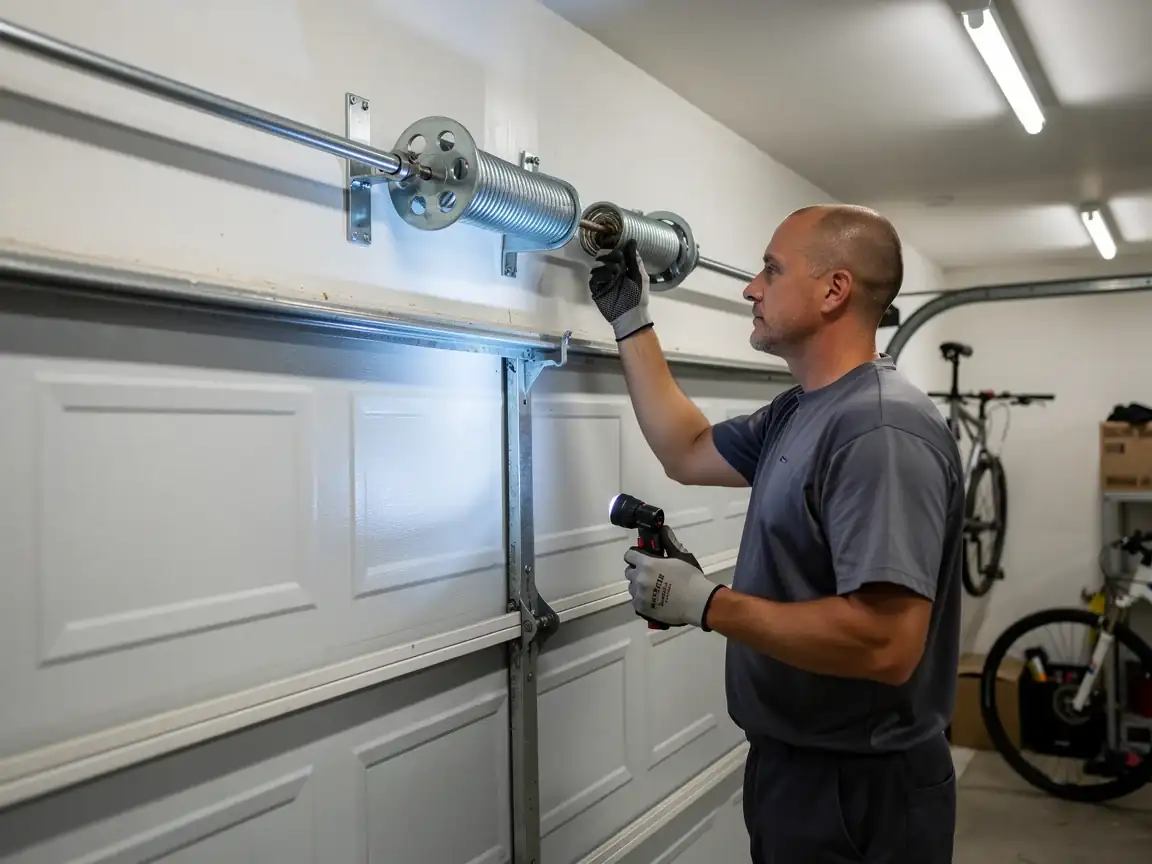
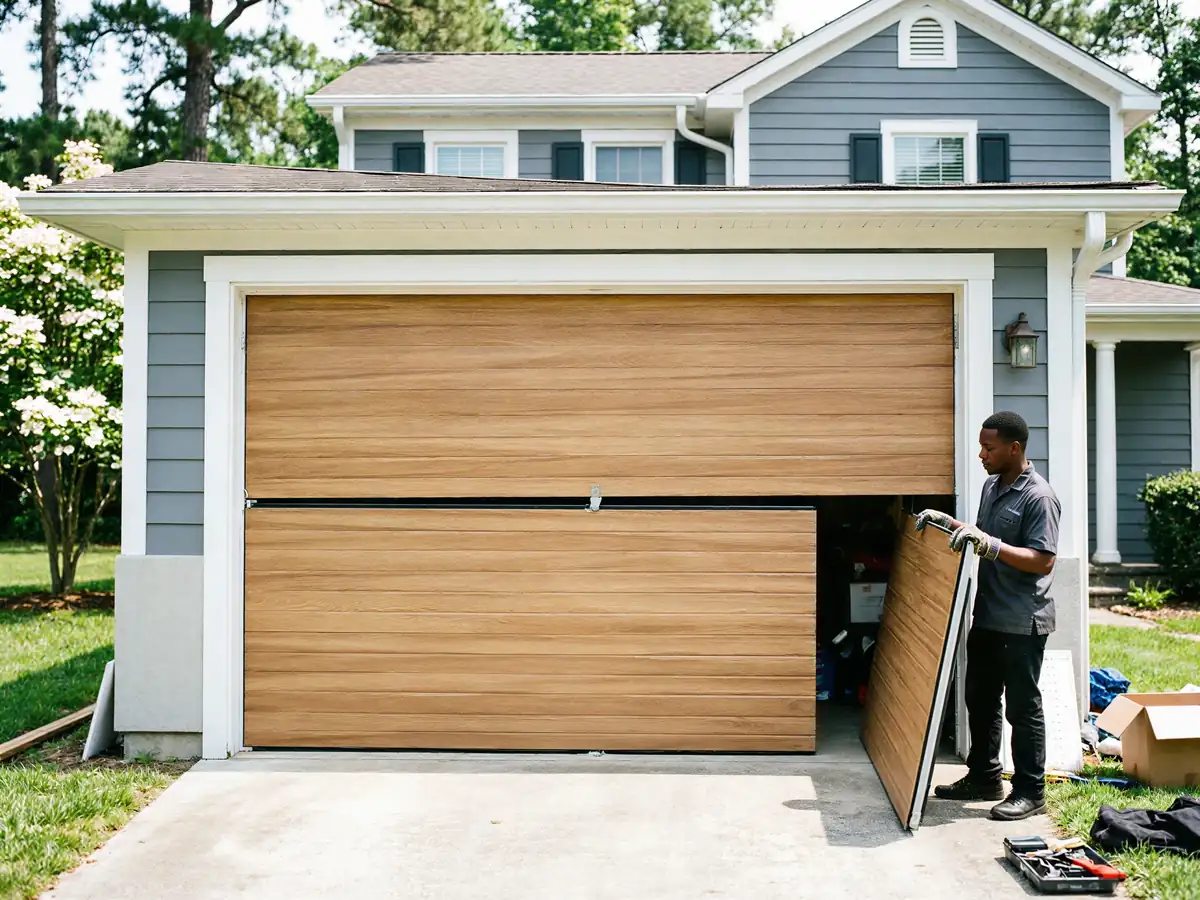
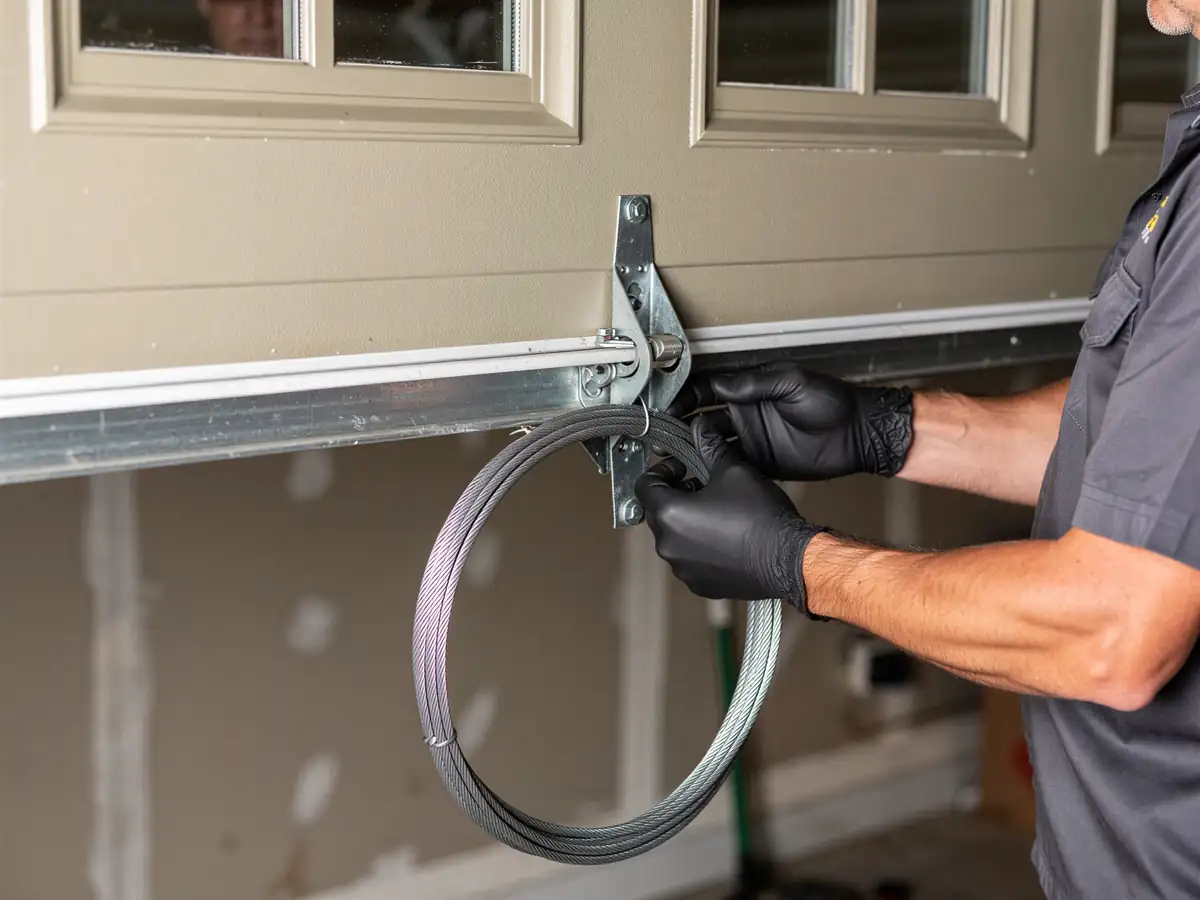
If your door is original to a house built in the 1965-1991 range, start with the spring. Look at the coil above the door - if it's visibly separated or you can see a gap in the wind, that's your answer, and it's not a DIY fix given the tension involved.
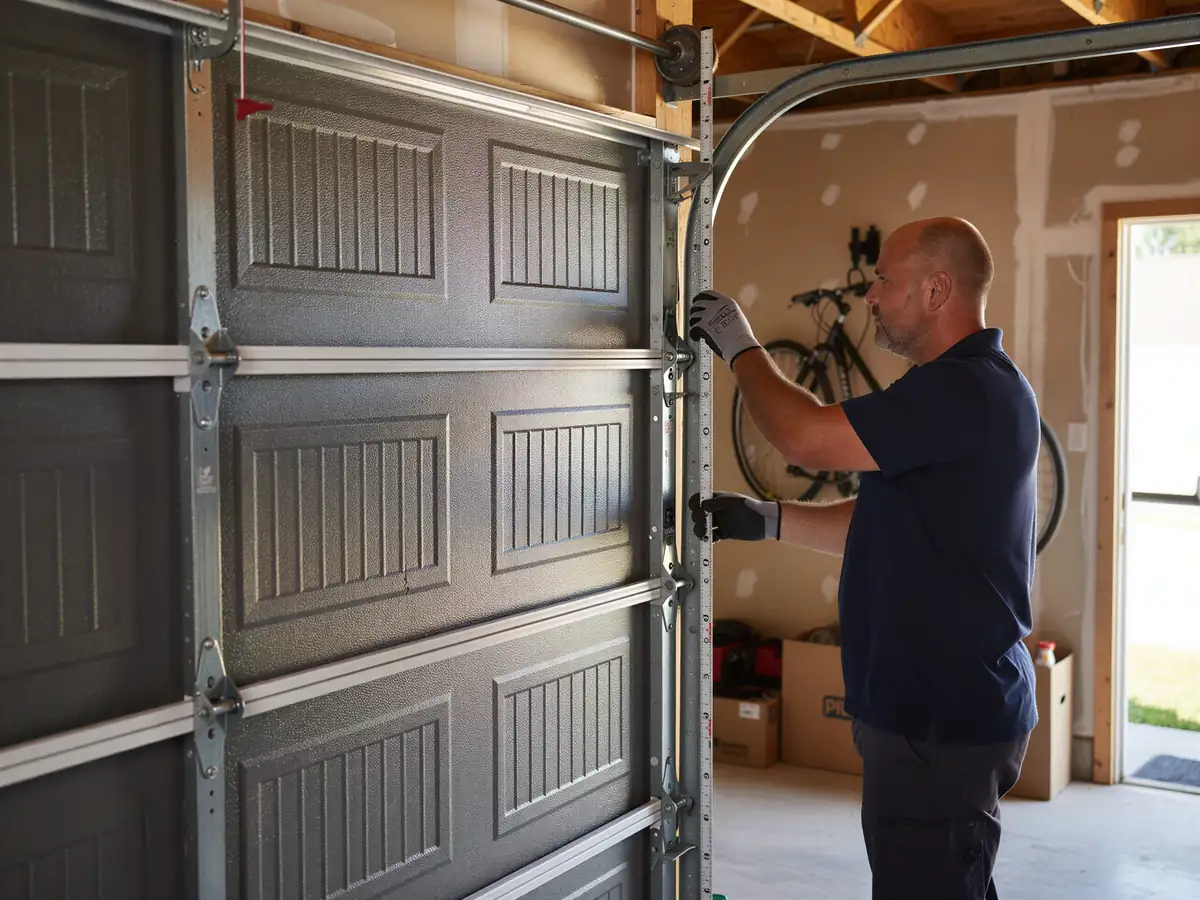
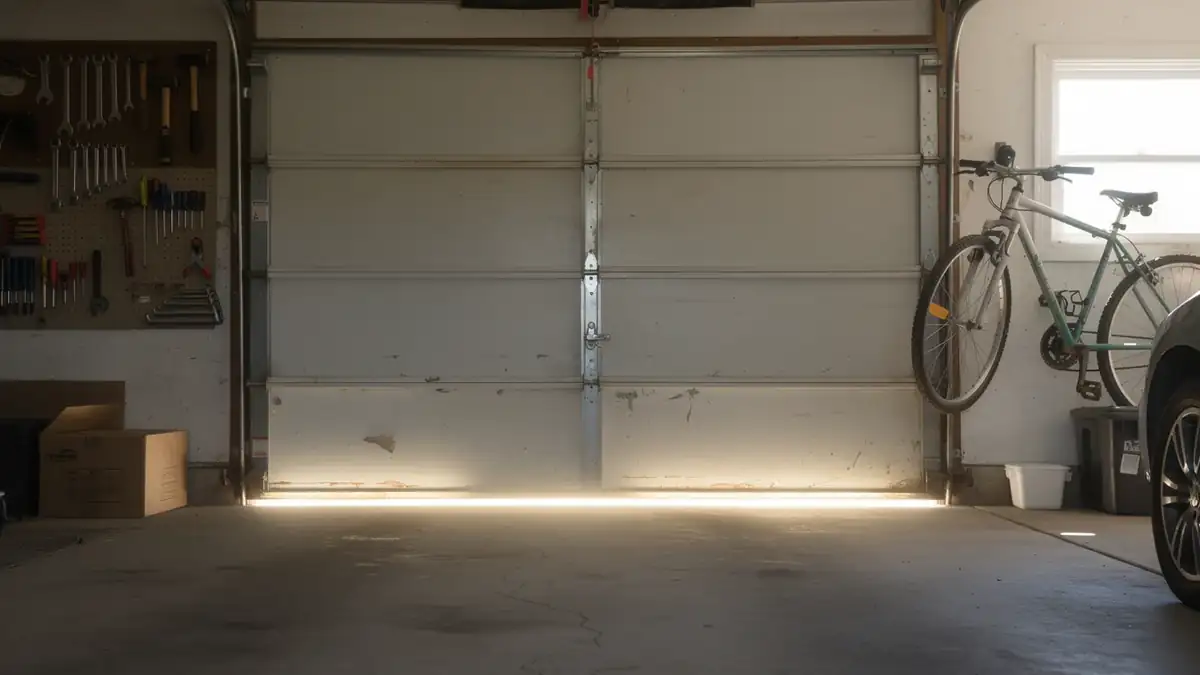
Next, check the track where it bends from vertical to horizontal. On houses this age, that's the spot most likely to have shifted slightly, and you'll usually see it as a scrape mark on the roller or a slight wobble in the door as it passes that point.
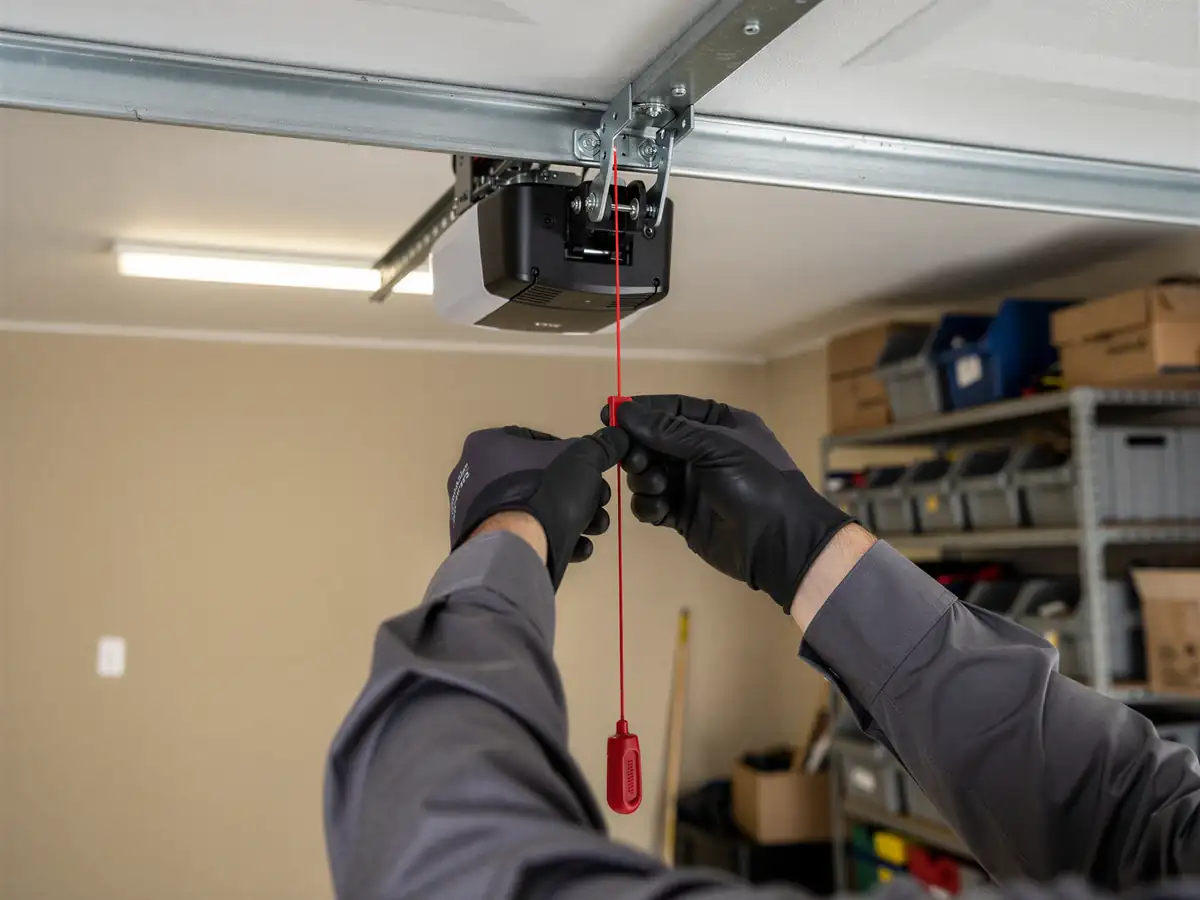
If the door operates but strains or the opener makes a grinding noise mid-cycle, that's often the opener compensating for a stiff section of track rather than an opener problem on its own. Replacing the opener without fixing the track just moves the strain to new hardware.
One honest limitation: we don't do wood door refinishing. If your door's structural hardware is fine but the wood itself needs refinishing or repainting, that's outside what we handle, and we'll say so rather than take the job and do it halfway.