How Local Conditions Play In
Opelika sits in a mild climate band with occasional freeze nights, not the deep-freeze swings that crack springs or seize openers for months at a stretch. That matters for how a door ages here. You're not fighting the kind of hard winter that snaps torsion springs early or warps steel panels from repeated freeze-thaw cycling. What you are fighting is decades of humidity and heat doing slow work on hardware - rollers wearing out of round, track bolts loosening, weatherstrip going brittle and cracking at the bottom corners. A door that's mechanically sound but hasn't been serviced in ten years in this climate usually has worn rollers and a tired spring before anything else fails. The lack of hard freeze means you rarely see the catastrophic single-event failures (a spring that snaps in -10°F cold); what you see instead is gradual wear that homeowners put off because nothing dramatic forces the issue. That's the trap - a door can run rough for years before something finally gives, and by then it's often more than one part.
The Cost of This Job
The service area here runs about 11,241 households, with roughly 6,300 of those owner-occupied houses - a lot of original garage doors still in service on homes built decades ago. Median household income across the area sits at $45,493, which shapes a real tradeoff: a full door and opener replacement is a bigger bite out of a household budget here than in a higher-income market, so repair-first makes sense more often than not. The honest limitation: if your door is original to a house built in the 1965-1991 range and the torsion spring, drum, and track are all original-spec, parts for that exact hardware can be slow to source or no longer made at all. In those cases, patching one part while the rest of the system is original-era steel sometimes costs nearly as much as swapping the operating hardware for current parts that are actually in stock. We'll tell you straight when that's the case instead of billing you for a stopgap.
What to Look At First
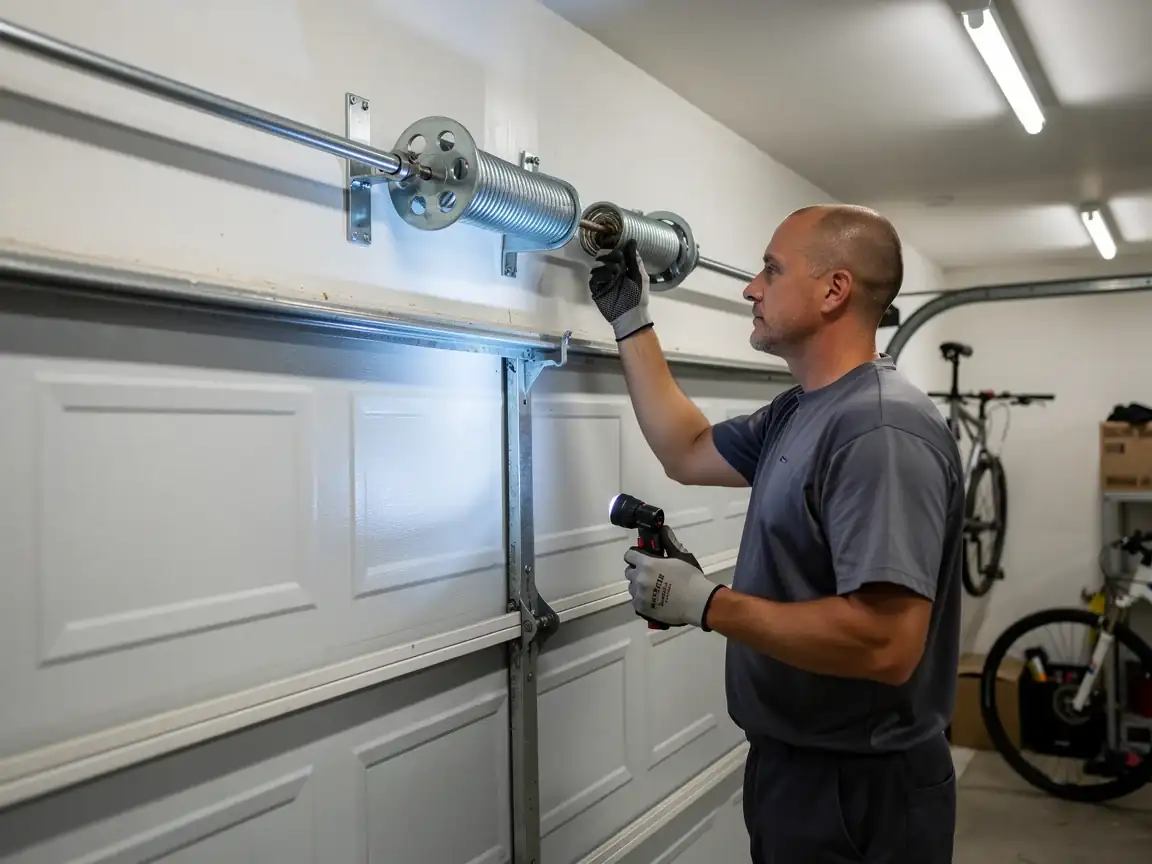
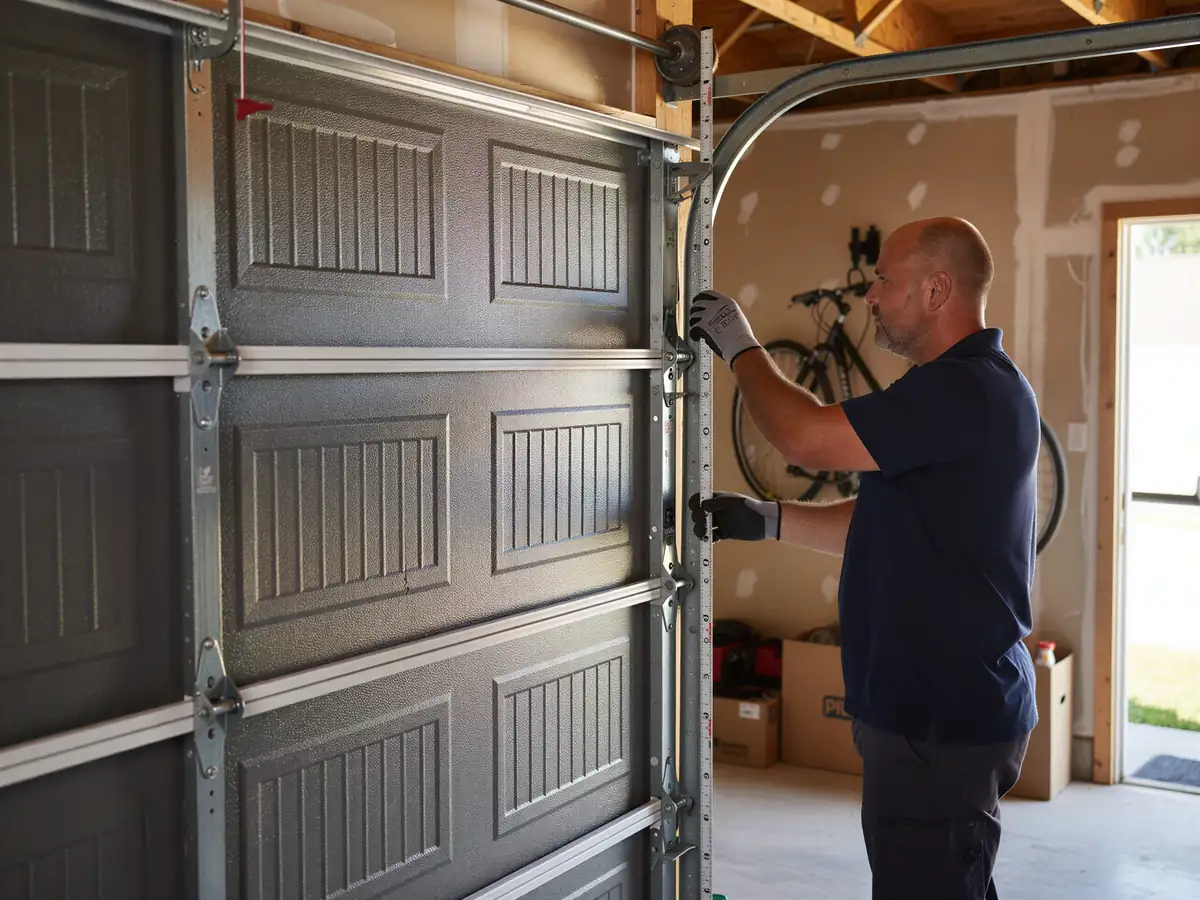
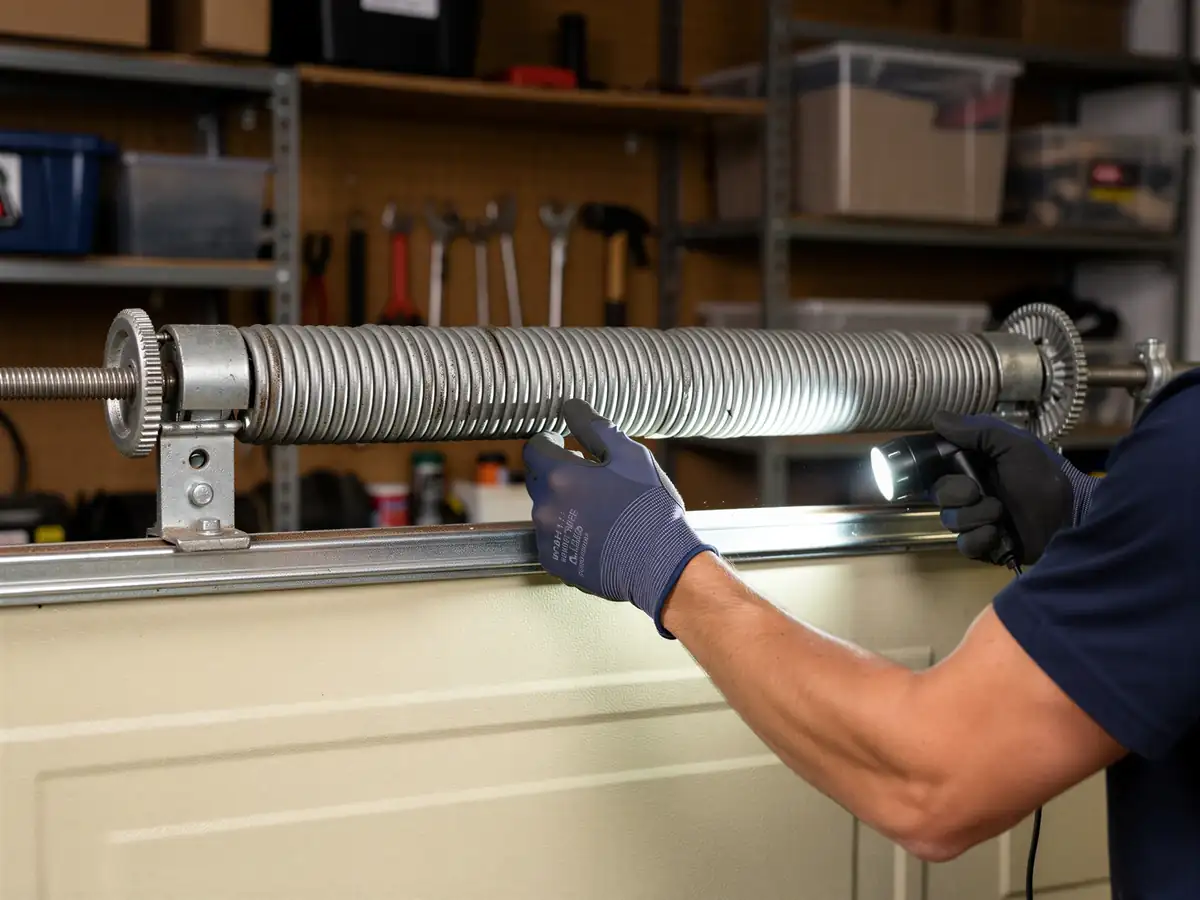
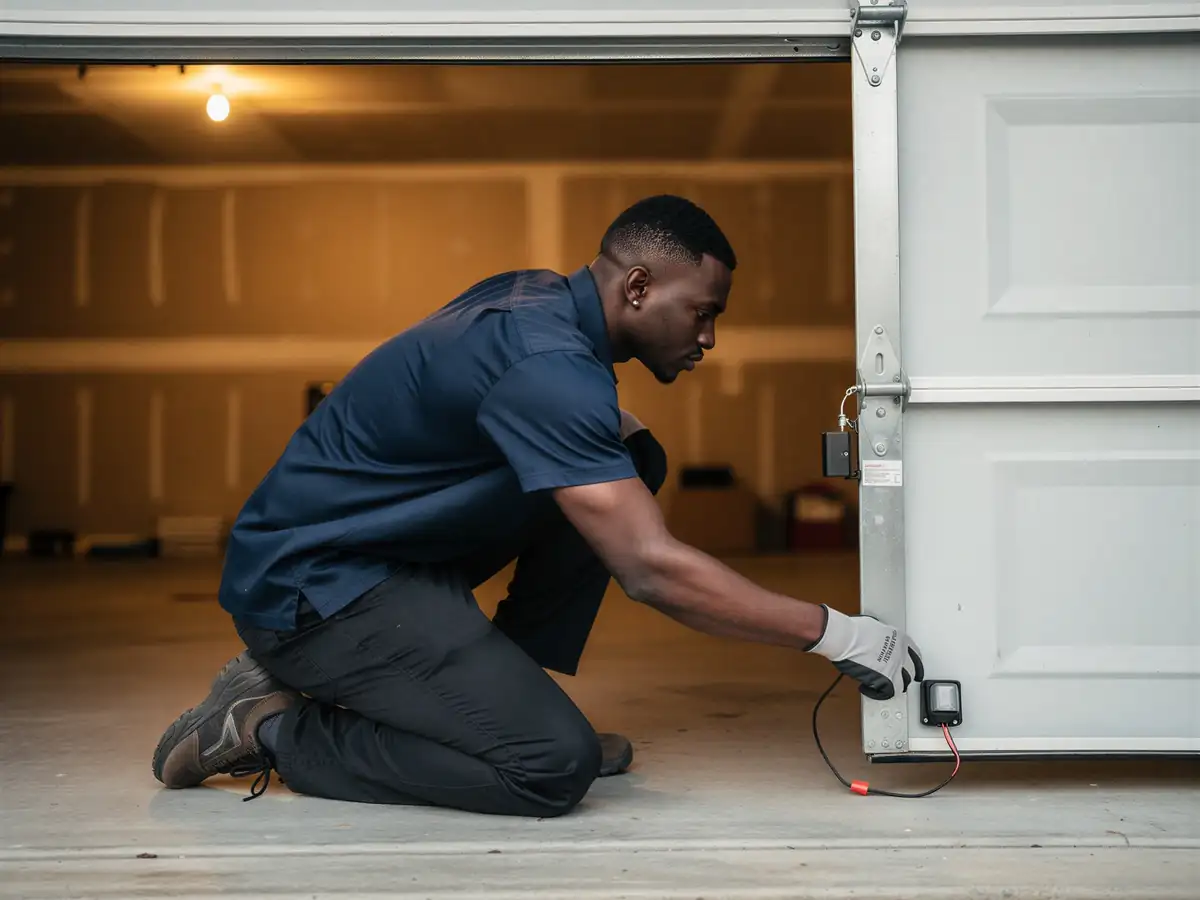
Start with the spring and the rollers, in that order. On a door this age, the torsion spring has usually seen thousands of cycles it was never rated for if it's original to a house built before the 1990s, so check for visible gaps in the coil or rust at the stress points near the winding cone. Next, look at the rollers - steel rollers on original 1970s-era doors wear out of round long before anything else fails, and you'll hear it before you see it, a grinding or popping sound as the door travels. Check the bottom weatherstrip too; in this mild climate it doesn't crack from cold, it dries out and splits from UV and heat over years, letting water and bugs in along the slab. Last, look at the track bolts where they anchor to the jamb - on original construction these are often the original fasteners, and decades of vibration loosen them even when nothing else is wrong. If you find wear in two or more of these spots at once, that's usually the sign the door's original hardware has reached the end of its practical life, not just one bad part.