How Local Conditions Play In
Opelika sits in a mild climate band with occasional freezes, not a place that spends months below freezing. That matters more than people think. A spring in a true cold-weather state gets exercised by temperature swings all winter and either breaks early or gets replaced out of habit. Here, a torsion spring can coast through ten mild winters without a single cold morning testing it, then hit one hard freeze and snap on the first lift of the day. Steel that's been sitting loose and unstressed loses a little flex every year, and a sudden cold snap is exactly the kind of shock that finds the weak point. Most of the housing stock across the service area went up between 1965 and 1991, median around 1976, which means a lot of these springs have never seen a real test. They've just been getting older. Add in that the eight main neighborhoods we work in are mostly 1960s-70s builds, and you've got thousands of garages running on original hardware that's outlasted its design life simply because the weather never forced the issue - until one morning it does.
The Cost of This Job
What this costs depends mostly on two things: whether it's one spring or a matched pair, and whether your door uses standard torsion springs or the older extension-spring setup some of these 1960s and 70s houses still have on the side rails. Extension spring parts aren't something every supplier keeps in stock, and if yours is one of those, expect the job to take a little longer to line up than a straight torsion swap. We're not going to quote a number here - every door and every spring size is different, and guessing at a price before we've seen the door does nobody any favors. With median household income in the service area at $45,493, we know plenty of owners try to stretch a repair as long as they can before calling, and that's a reasonable instinct right up until the spring actually lets go while the door is open. A spring that snaps mid-cycle can drop a door or jam it halfway, and that's a worse morning than the repair bill.
What to Look At First
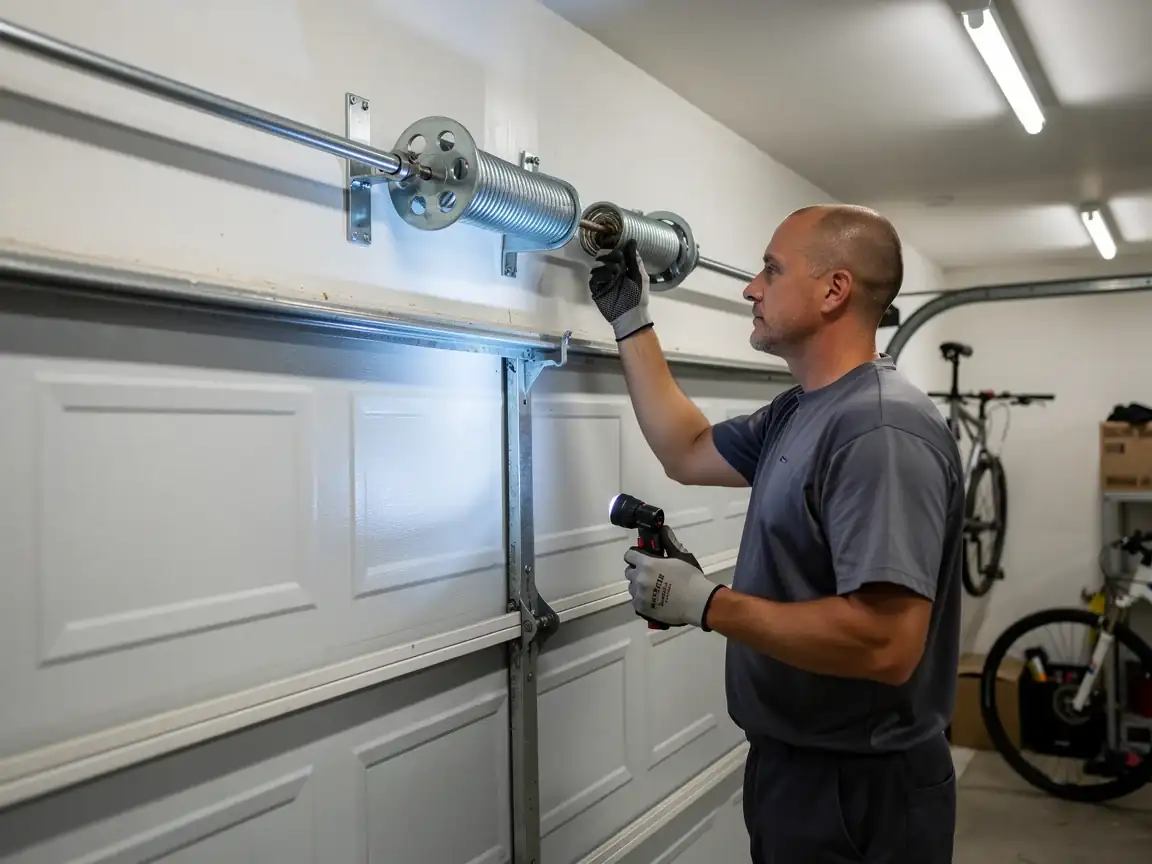
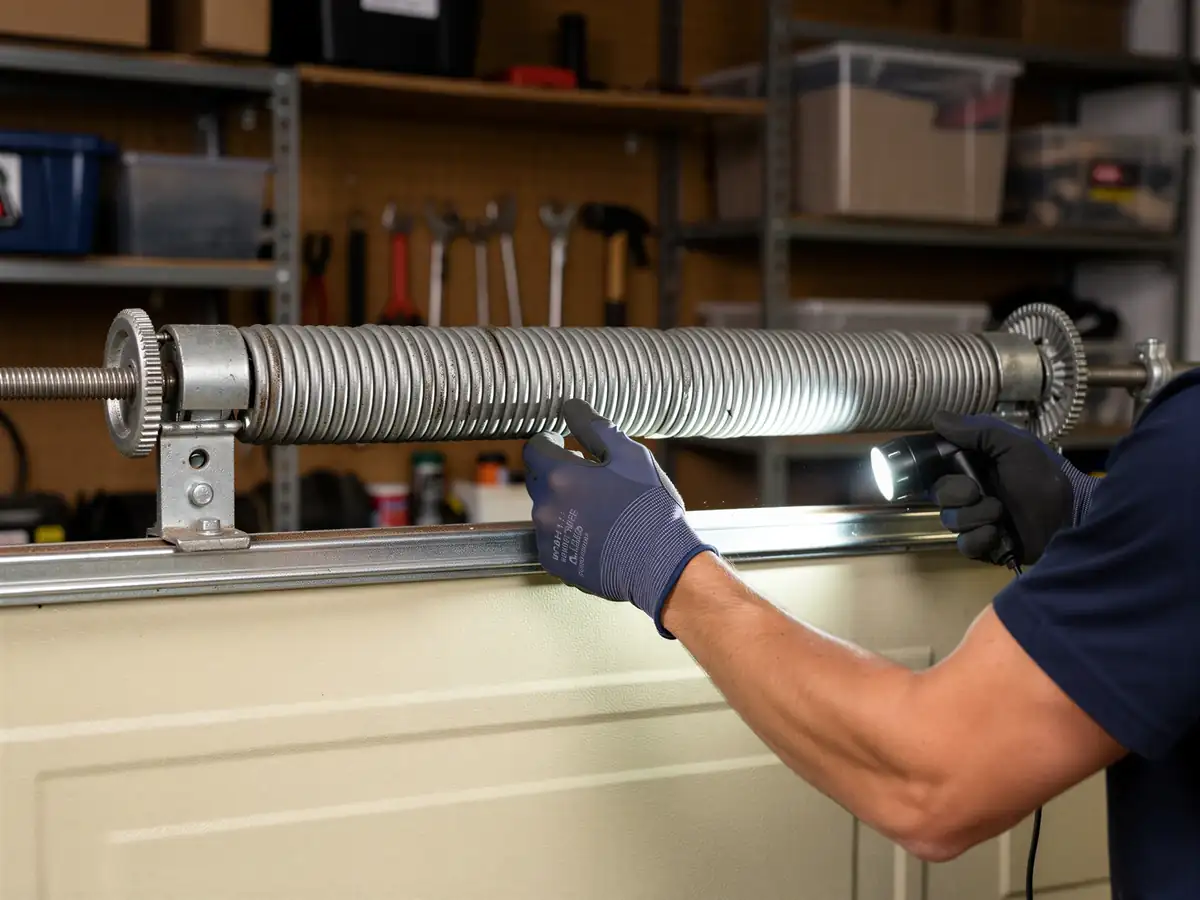
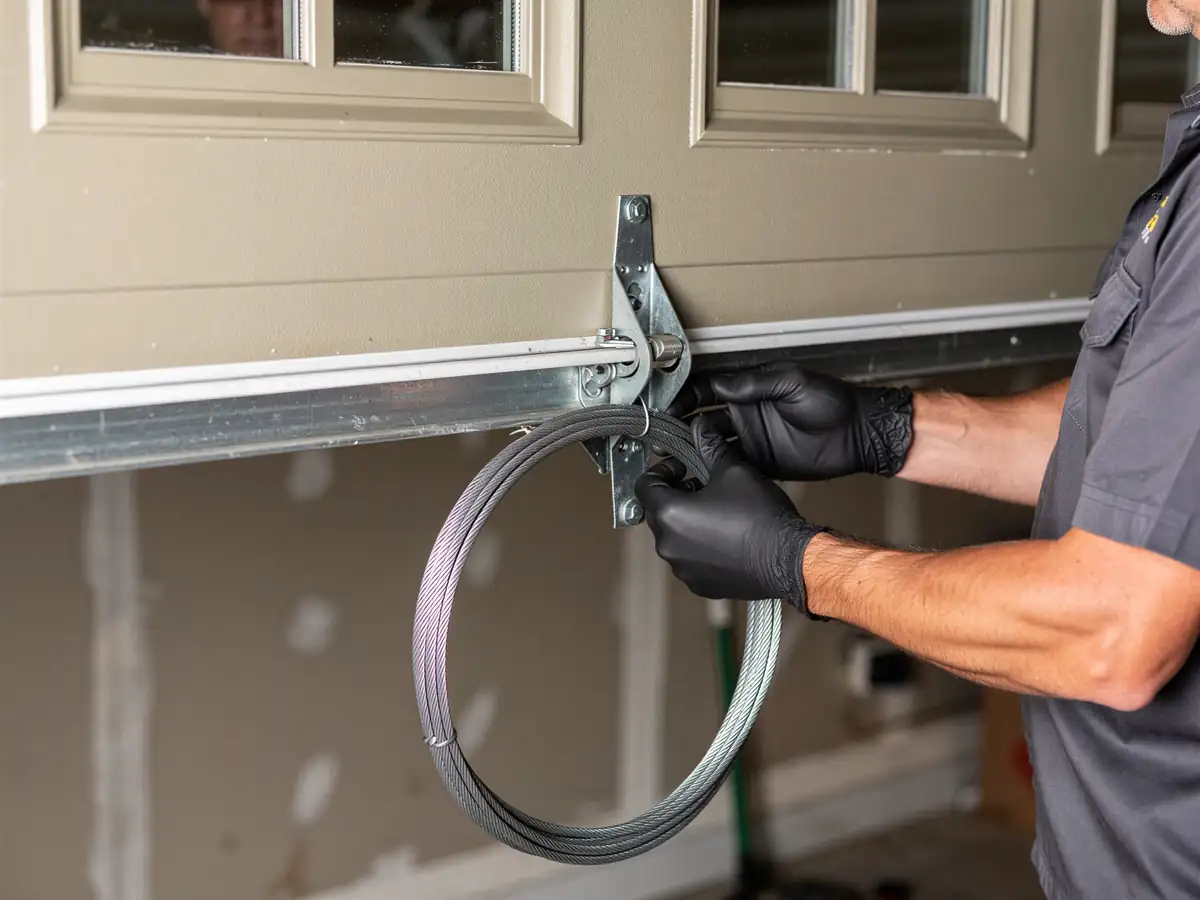
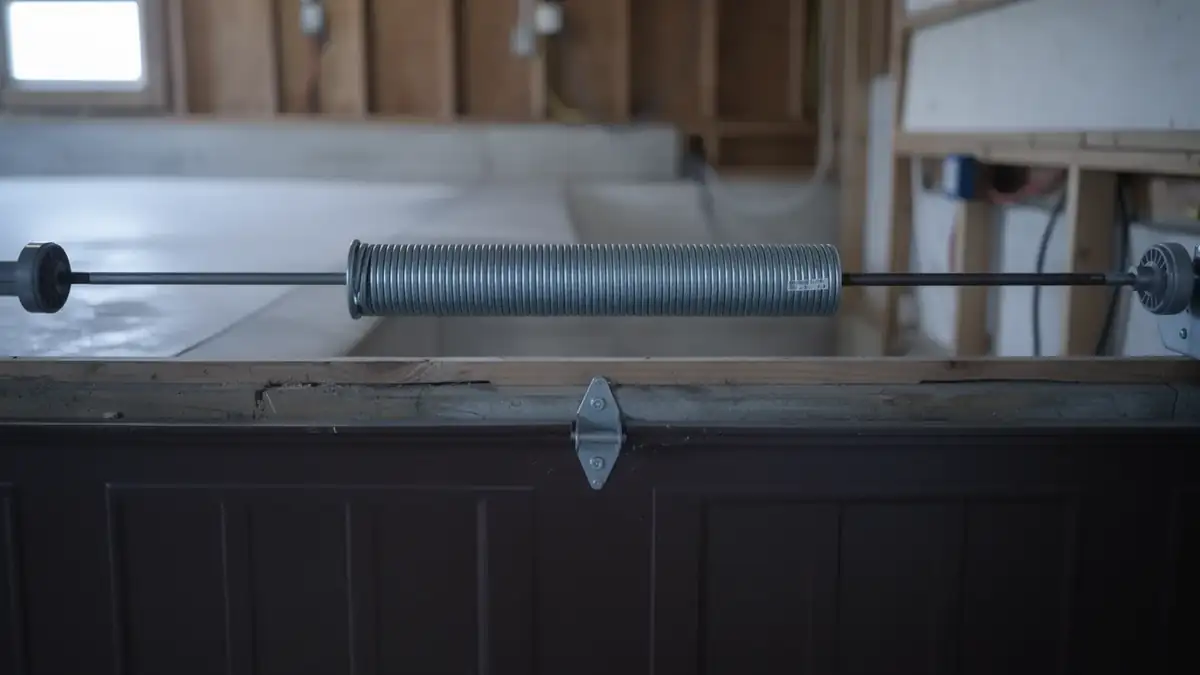
Before you call anyone, look at the spring itself - it's usually mounted above the door on a horizontal shaft. Check for a visible gap in the coil, which means it's already broken, or a stretched, uneven look to the winding. Rust along the coils is common on original 1960s-70s hardware that's never been touched, and rust eats at the steel's flex over time. If you've got the side-mounted extension springs instead of the overhead torsion type, check that the safety cables are still threaded through them - a lot of older installs are missing this. Don't try to wind or unwind a torsion spring yourself; that's genuinely dangerous and it's the one part of this job that isn't a reasonable DIY project no matter how handy you are. If the door feels heavier than it used to, or it doesn't stay put halfway open, that's usually the spring losing tension well before it snaps outright.