Where This Job Goes Sideways
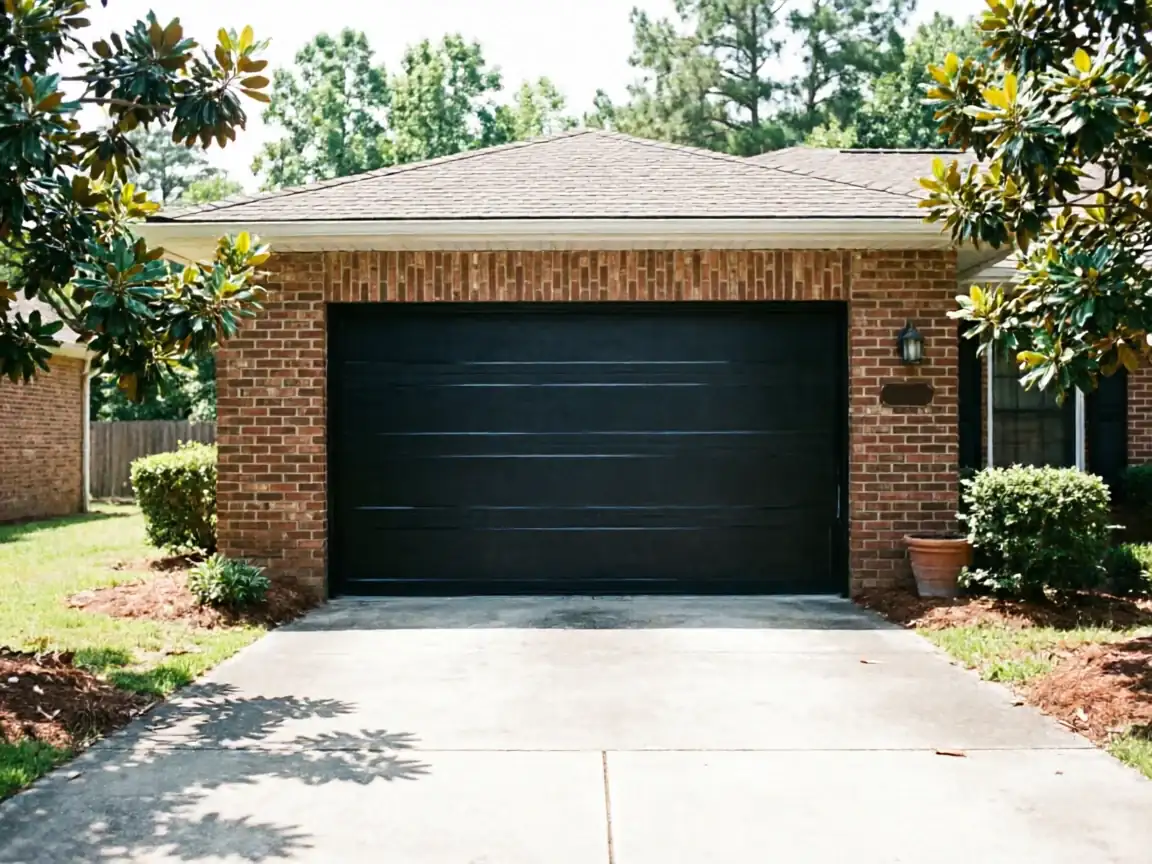
Smiths Station doesn't match the rest of the territory we run trucks through. Across the broader service area, the median house went up in 1976, smack in the middle of a 1965-1991 build window. Smiths Station skews to the back end of that range, closer to 1991. That's a real gap - fifteen years of hardware changes, door weights, and opener mounting styles sit between a typical Smiths Station garage and a typical Opelika one.
Why it matters: a crew that shows up expecting the older torsion setups common closer to Opelika can get surprised here. Newer doors built in the late '80s and early '90s often came with different spring counts, different track gauges, and openers wired for features that didn't exist a decade earlier. We don't assume one job looks like another just because the truck came from the same shop.
Smiths Station also sits at 19 miles out, the farthest edge of the area we cover from Opelika. That's not a complaint - it's a planning fact. A job here gets scheduled as a dedicated trip, not a stop squeezed between two closer calls, and that's worth knowing before you call.
The Symptom
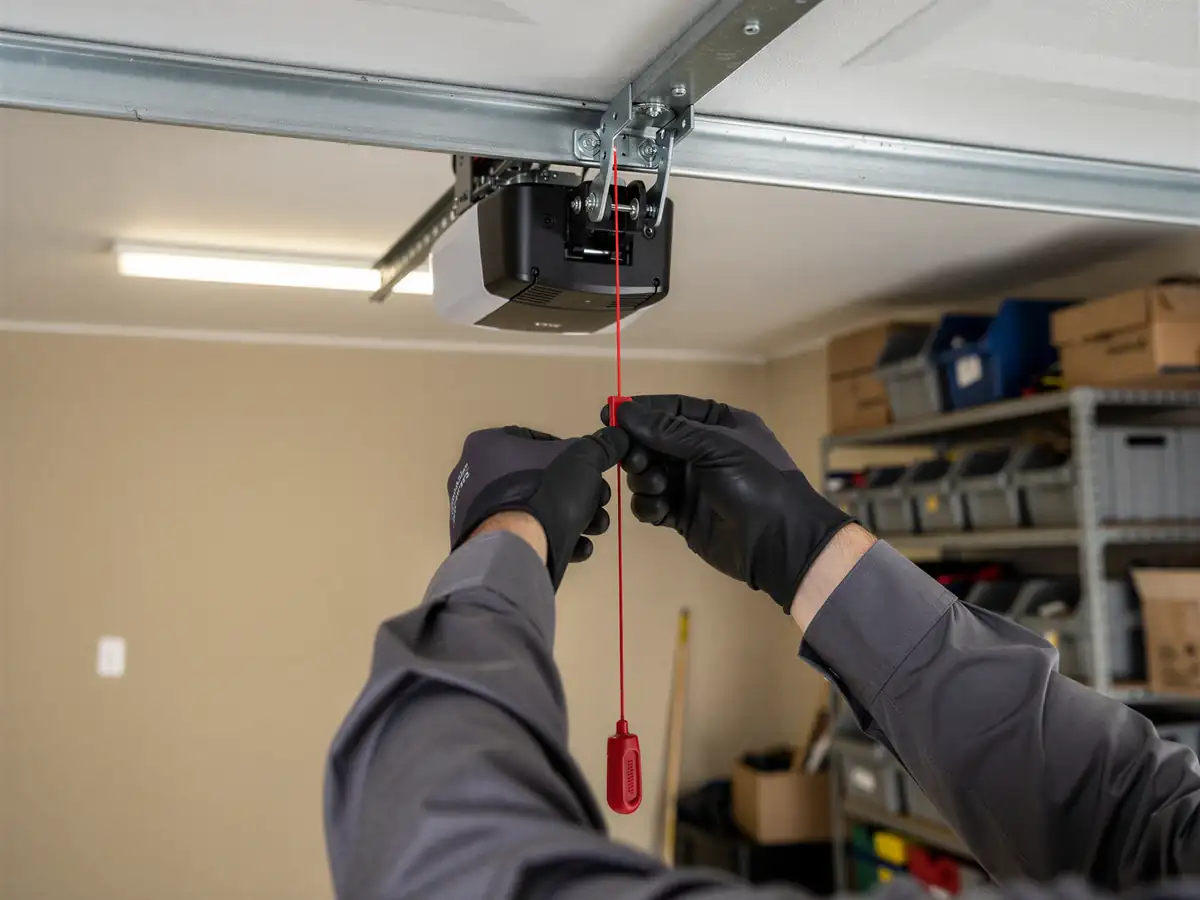
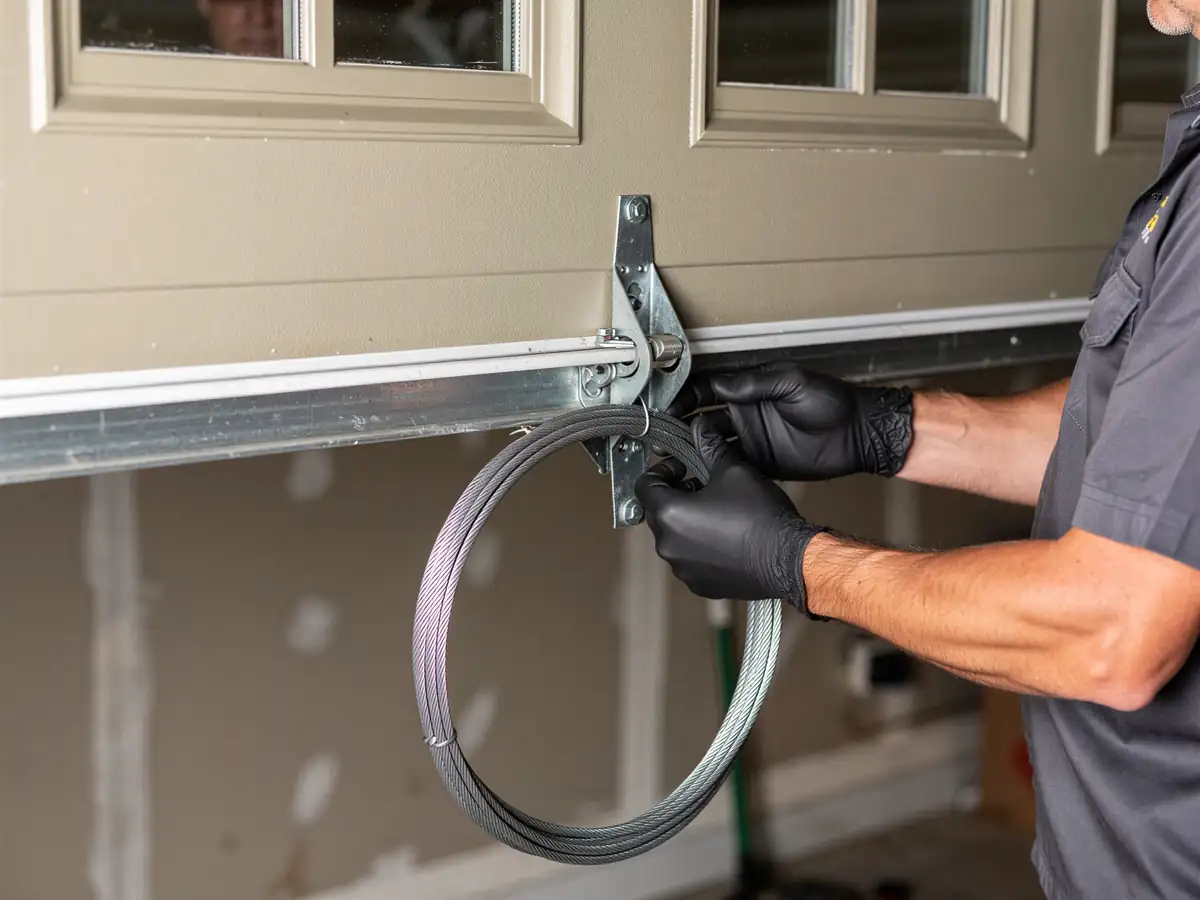
The complaint we hear most from this stretch is a door that opens fine but comes down crooked, or an opener that runs the motor without the door moving far. On houses from the later end of the build window, that's often a cable off its drum rather than a spring problem outright - newer drum and cable setups can slip under different stress patterns than older torsion bar systems.
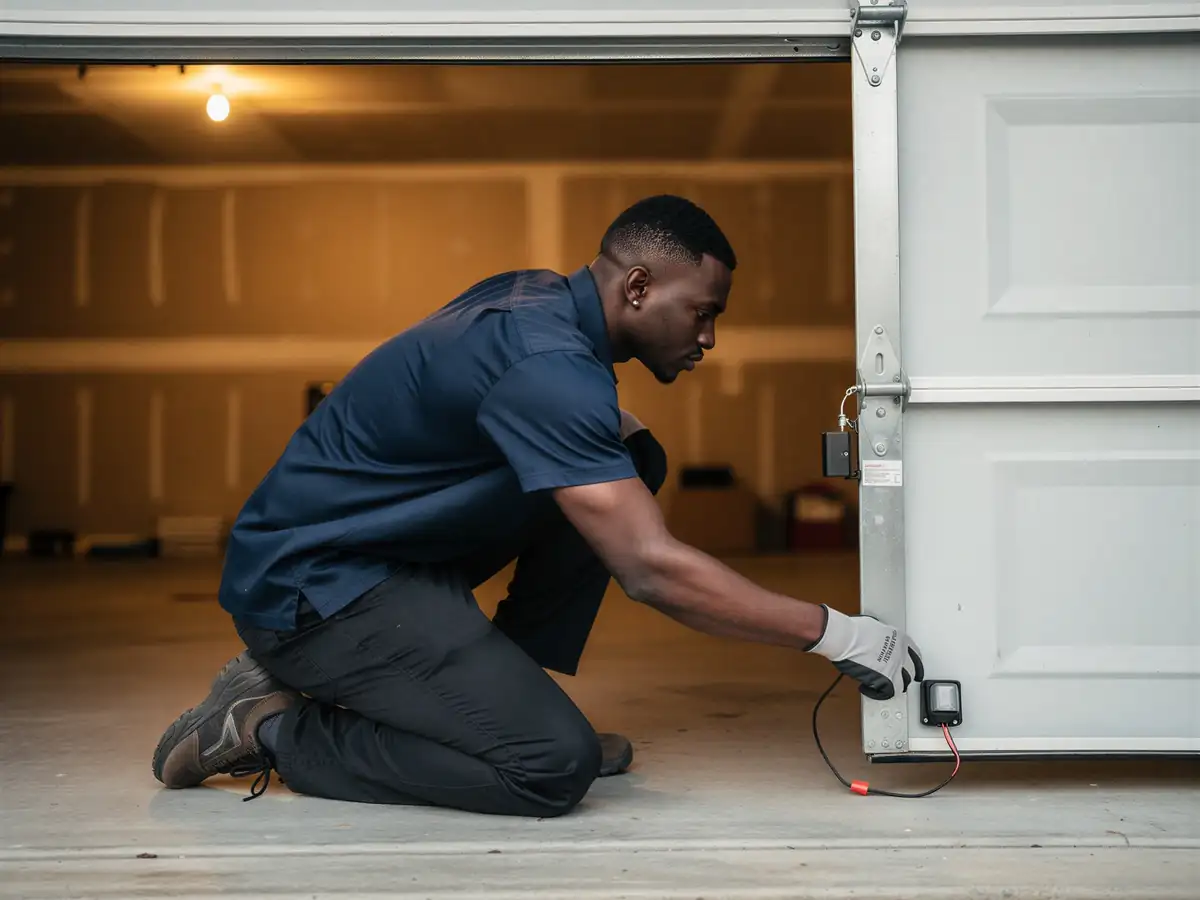
A second common call: a door that reverses itself halfway down. On houses from this era, that's frequently the opener's safety sensors, not the door hardware, since these years are when photo-eye sensors started becoming standard rather than optional add-ons.
If your door is slow to respond to the remote but fine on the wall button, that's usually a receiver or antenna issue inside the opener housing, not a door problem at all. Worth mentioning before a bigger repair gets booked for something smaller.
What Causes It Around Here
The climate band covering this area is mild with occasional freeze risk
Not the deep freeze-thaw cycling that destroys hardware up north, but enough cold mornings each winter to stiffen grease in rollers and tighten metal just enough to change how a spring sits under tension. On a newer door from the later build years, that usually shows up as noise before it shows up as failure - a roller that squeals on a cold morning is telling you something a week or two before it seizes.
Humidity swings matter more here than hard freezes
Wood jambs around doors from this era can swell slightly in wet spells and bind a door at the top corners, which reads like a track problem but is actually a frame problem. We check the jamb before we touch the track on calls like that.
None of this is dramatic weather
It's slow wear from ordinary swings, which is why doors from the late '80s and early '90s in Smiths Station are usually failing from age and use, not from storm damage or a single bad event.
The Cost of This Job
We don't post flat prices here because the job varies by what's actually wrong, but a few things affect cost specific to this area. Median household income in Smiths Station runs noticeably higher than the service area average - $57,410 against a $45,493 median across the broader territory - and that tends to track with houses that have had at least one prior opener upgrade or door replacement already. That matters because a house with newer hardware is sometimes a simpler fix (parts are more standard, less obsolete) and sometimes a more involved one if it's got a specialty opener with smart-home wiring that an older house wouldn't have.
Distance also factors in. At 19 miles out, a Smiths Station call is one of the longer trips we make from Opelika, and that gets built into scheduling rather than hidden in a surprise fee.
With only 1,728 households in Smiths Station itself, this isn't high call-volume territory for us, so we're not quoting off a pattern of dozens of nearly-identical jobs - every estimate here gets looked at on its own.
Can You Do This Yourself
Some of what breaks on a late-'80s to early-'90s door is genuinely a homeowner job. Tightening a loose roller bracket, clearing debris from a track, replacing a dead remote battery, or lubricating hinges - any of that is fine to do yourself with basic tools.
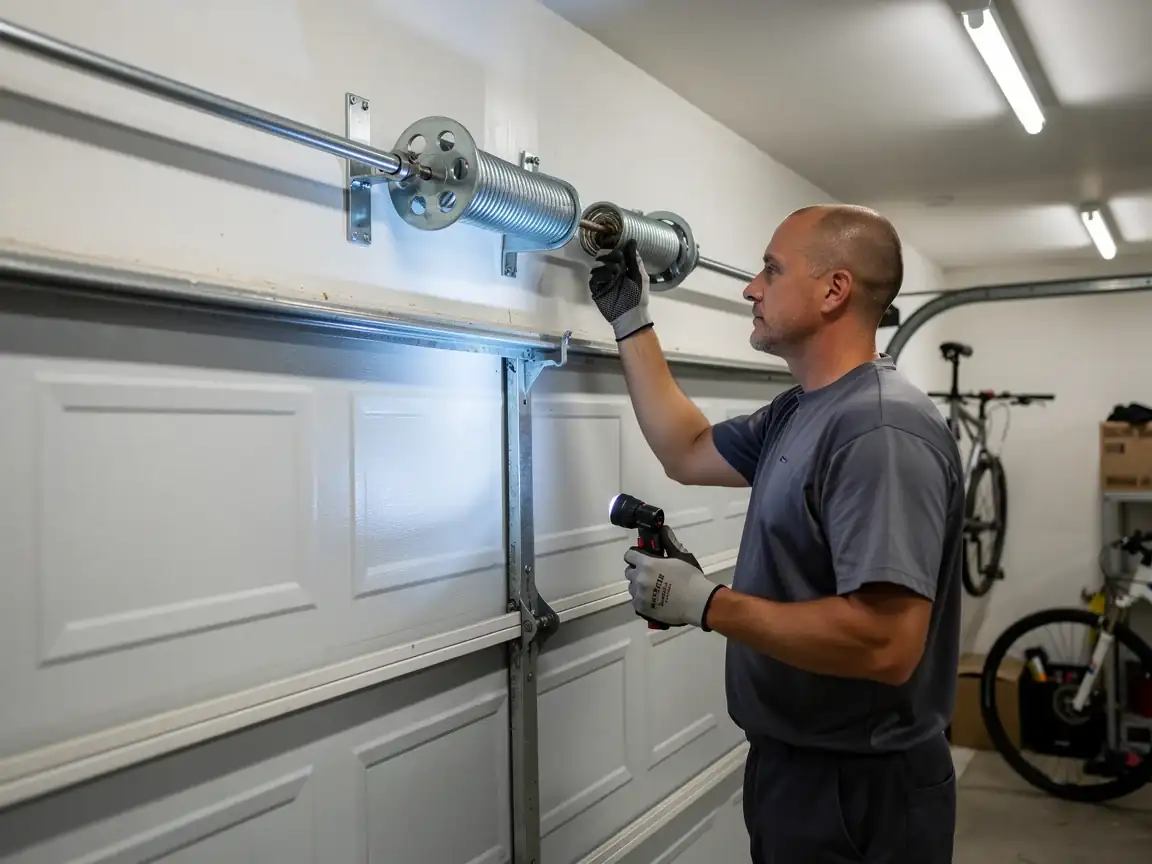
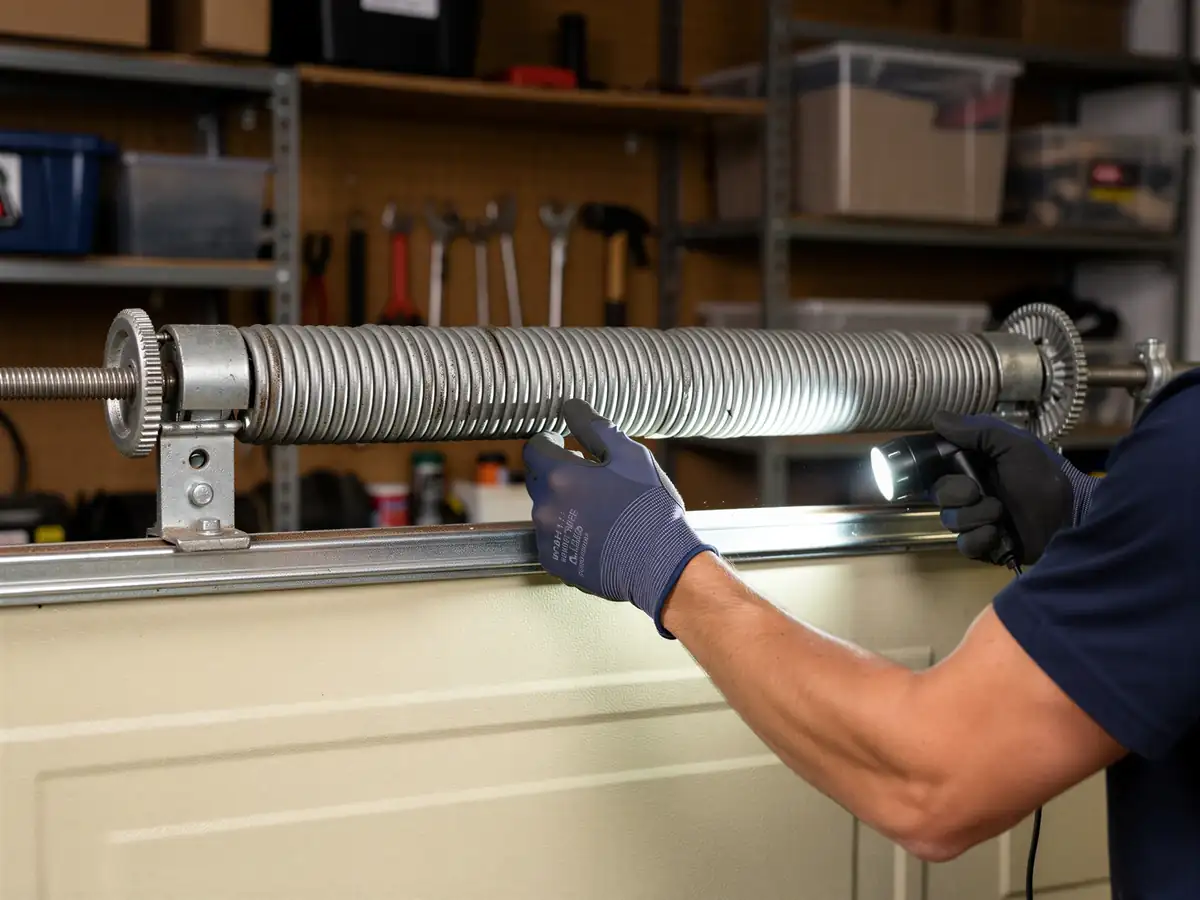
What isn't: anything involving the torsion or extension springs themselves. These store enough force to break a hand or worse, and the tools to work on them safely aren't things most garages have lying around. If your door won't budge and you can see the spring is coiled oddly or snapped, leave it alone and call someone.
One honest limitation: if your opener is old enough that the manufacturer no longer makes replacement circuit boards for it, repair isn't always possible, and we'll tell you that rather than charging for a part that doesn't exist. Sometimes the right answer is a new opener, not a patched-up old one.