Can You Do This Yourself
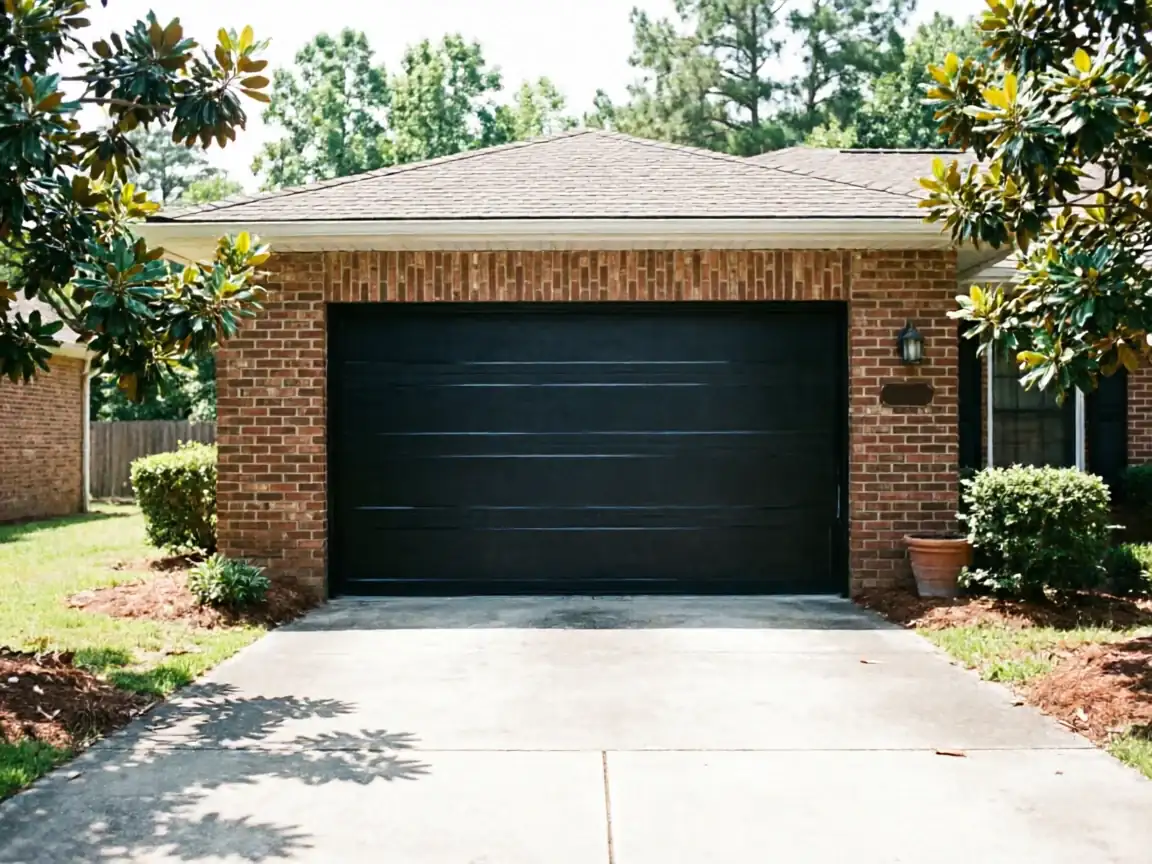
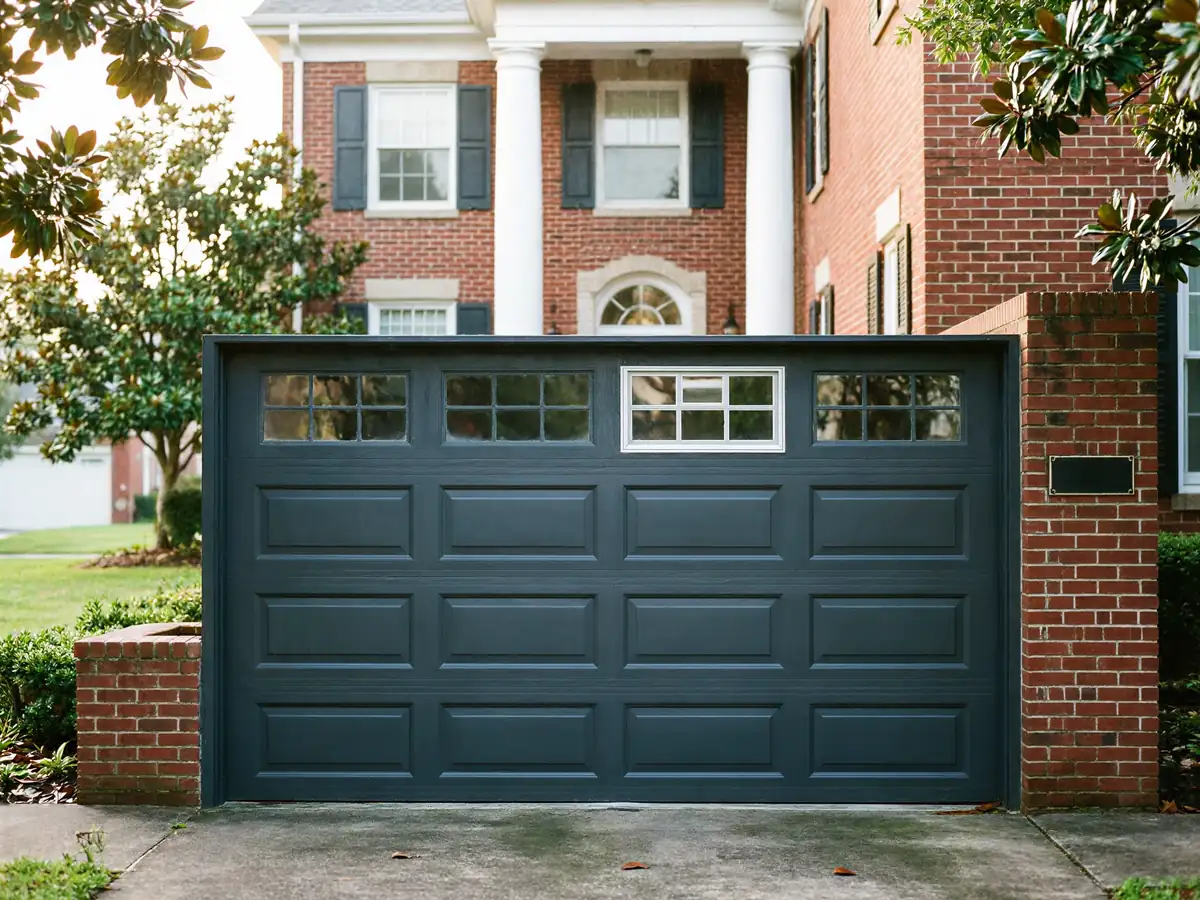
A lot of the doors we see out here went up around 1976, which puts them square in the era when steel sectional doors with raised rectangular panels took over from wood. That's a double-edged fact for a DIY repair. Steel sections are easier to source than a custom wood replacement, but the panel has to match the existing profile and the track spacing on a door that's pushing fifty years old, and few suppliers stock that exact panel anymore.
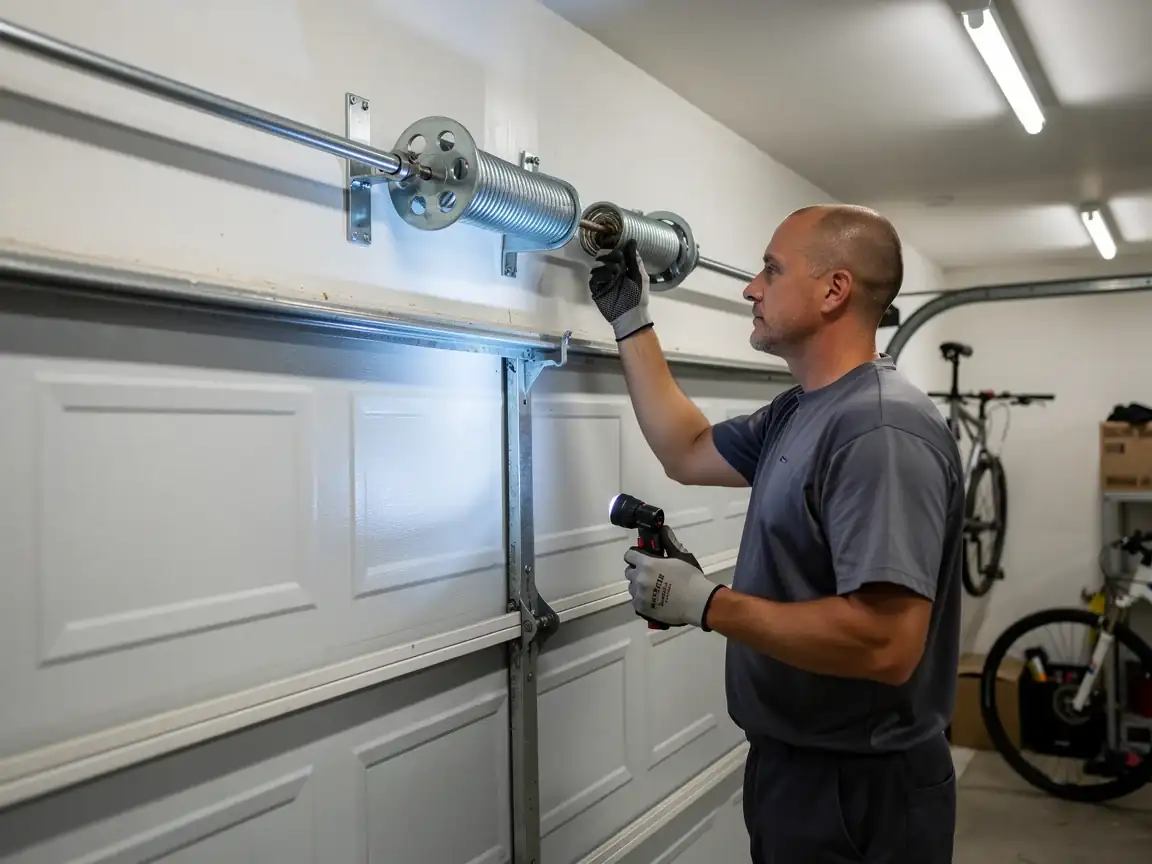
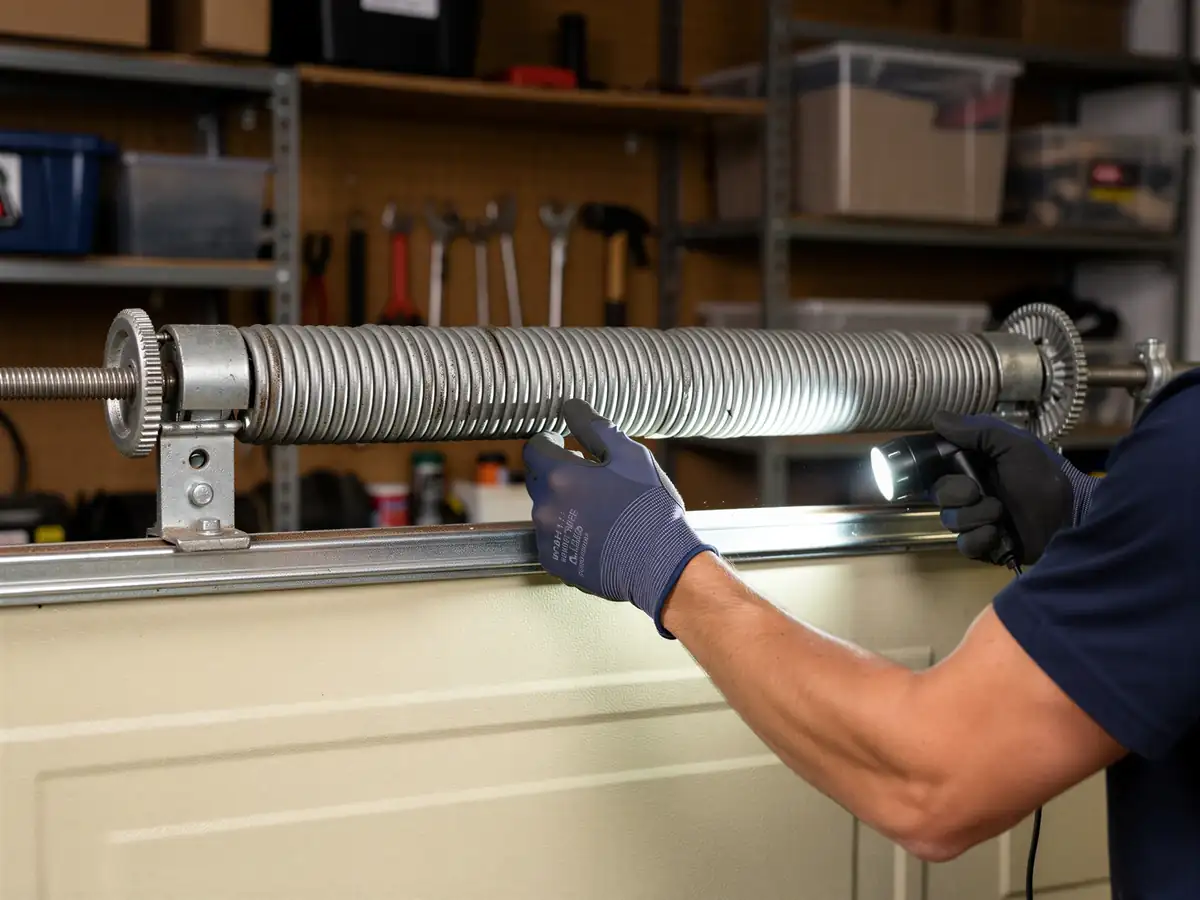
If one section has a dent, a crack from a car bumper, or rust creeping up from the bottom rail, you can sometimes find a close match, but getting the hinge holes, roller placement, and panel height right without the door racking in the track takes more than a tape measure. We're not going to tell you it's impossible - some people do pull it off. But if you get the panel seated wrong, the door binds, the opener strains against it, and you've turned a one-panel job into a full section-plus-hardware job. If you're not confident reading a torsion spring or taking tension off the cables safely, this isn't the place to learn on a Saturday.
What the Repair Takes
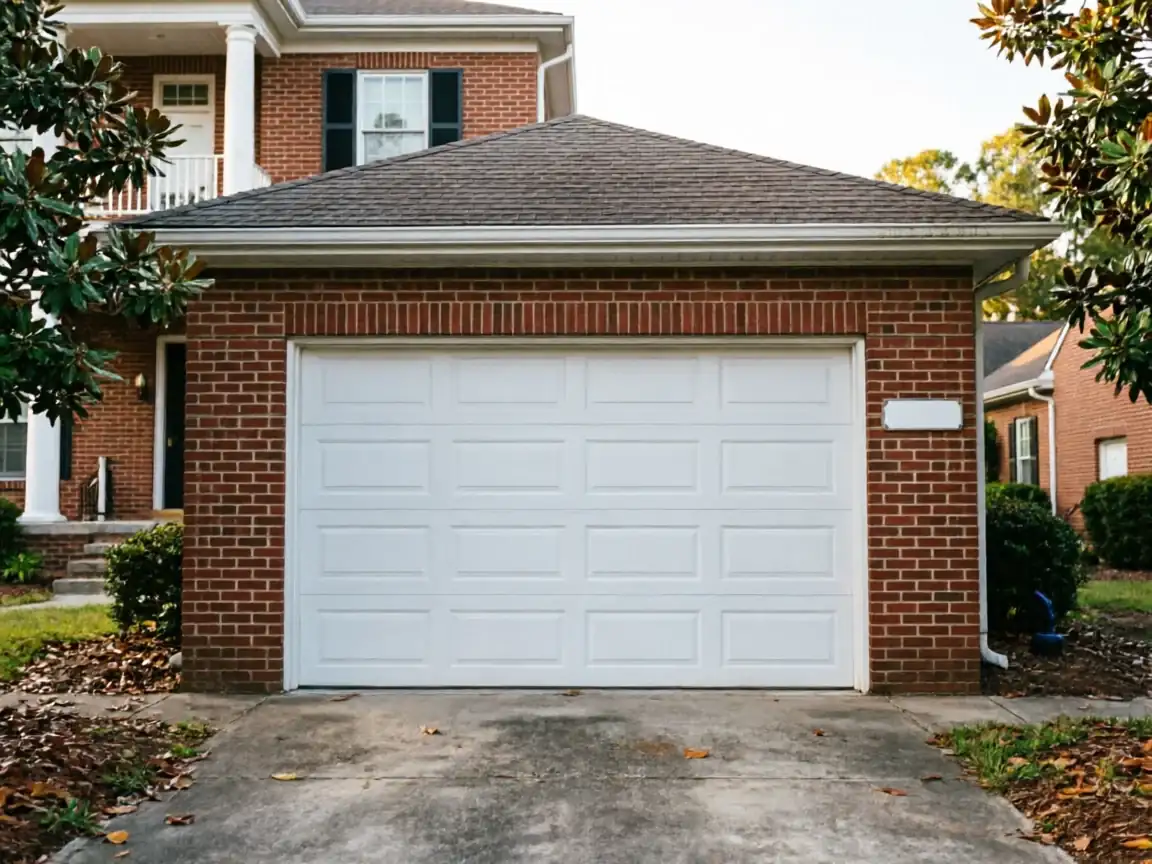
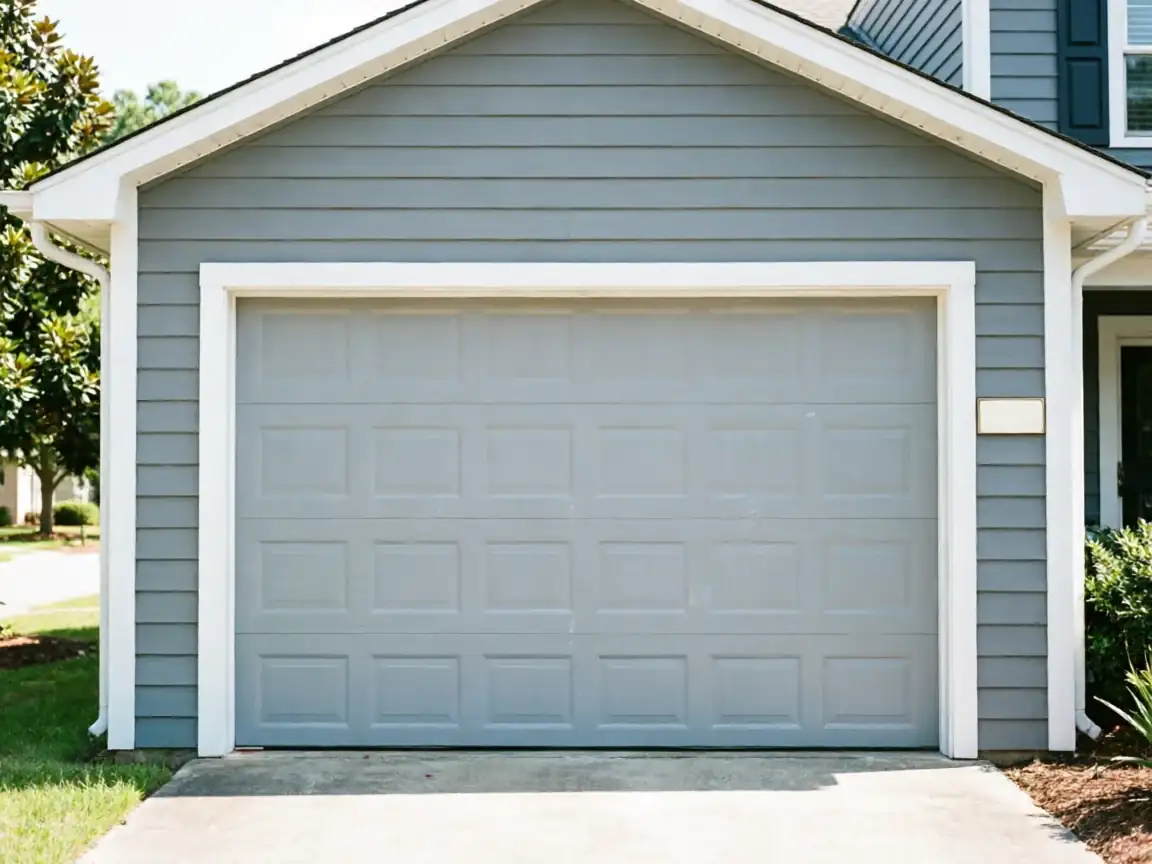
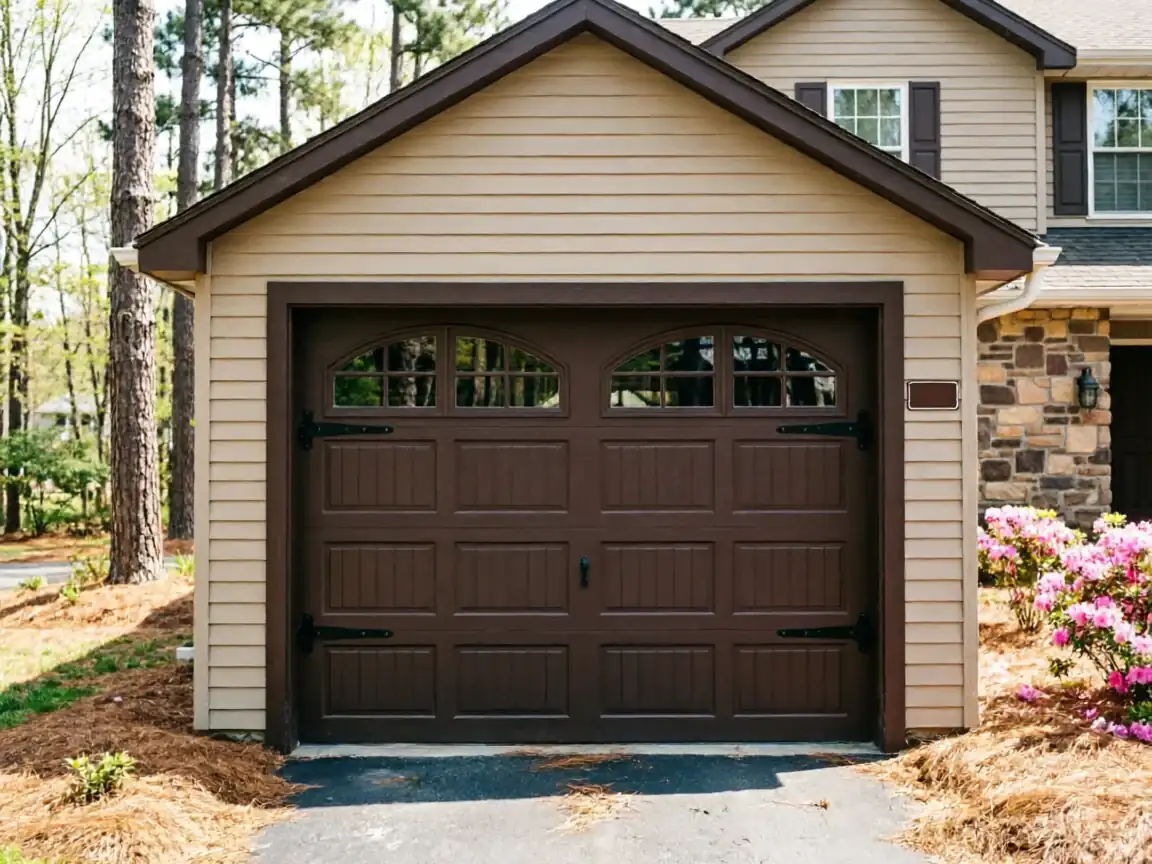
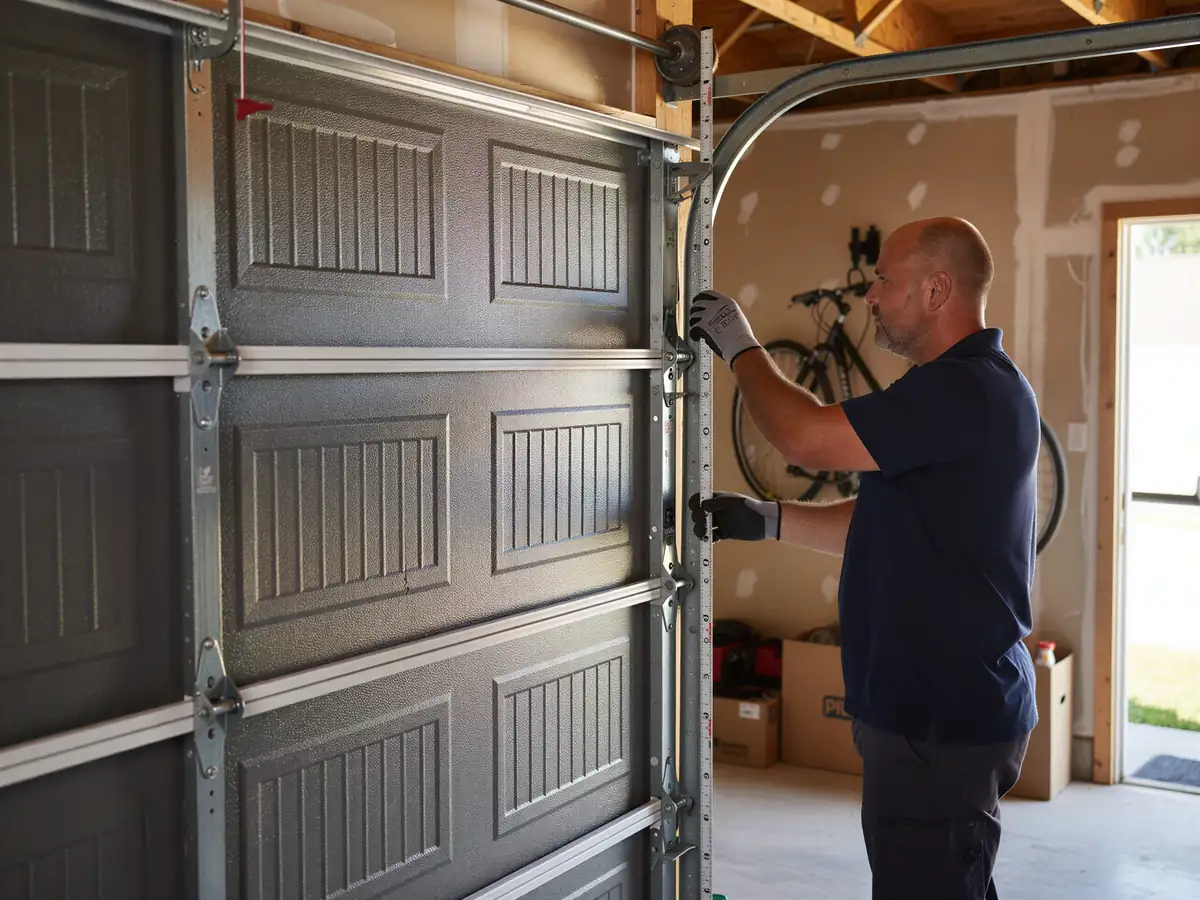
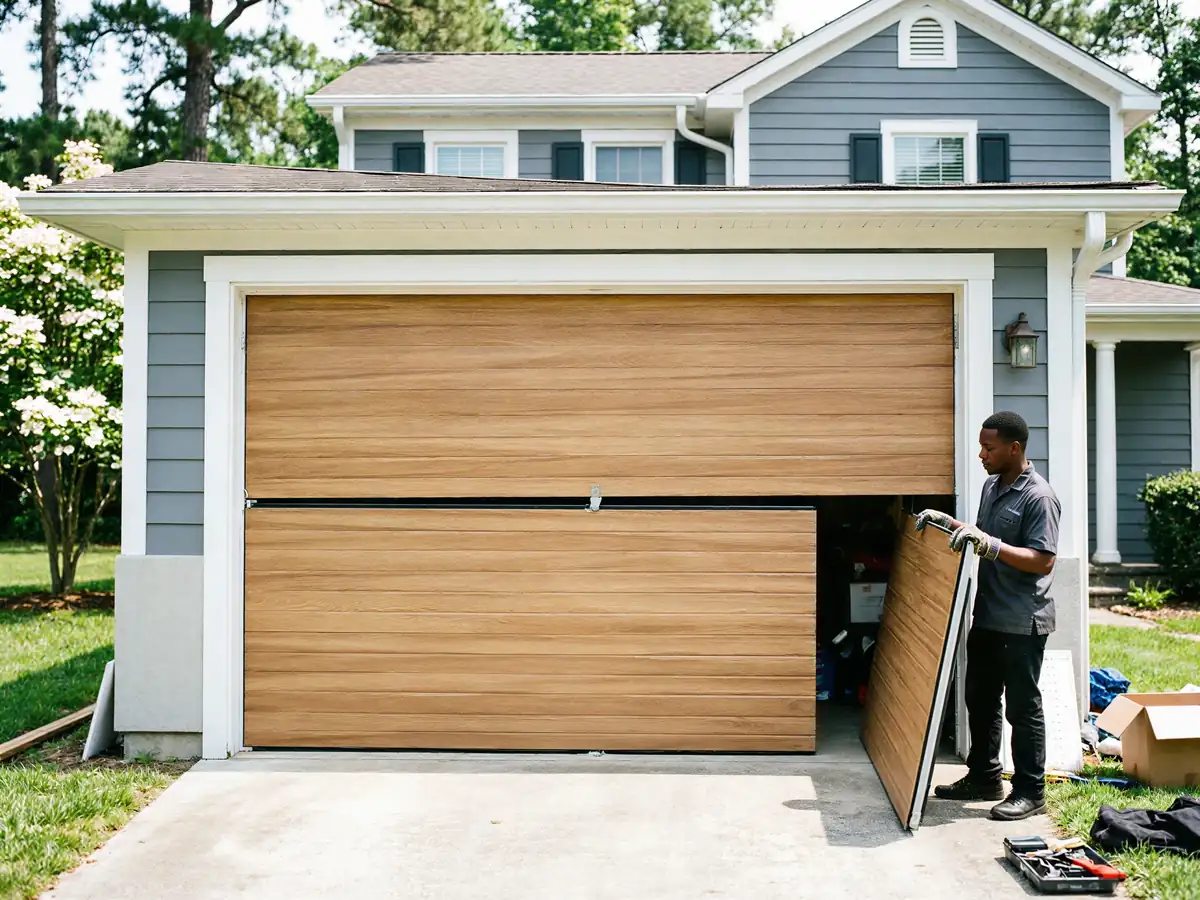
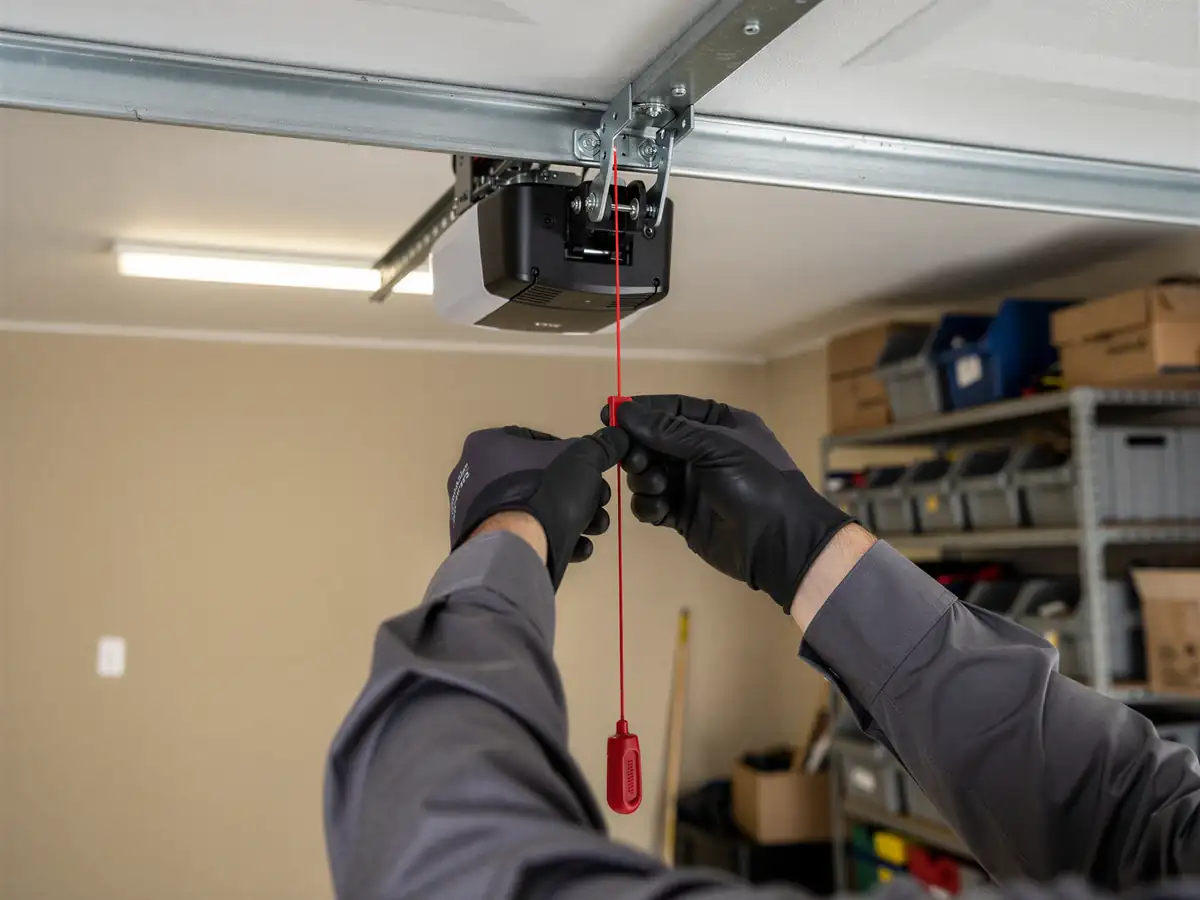
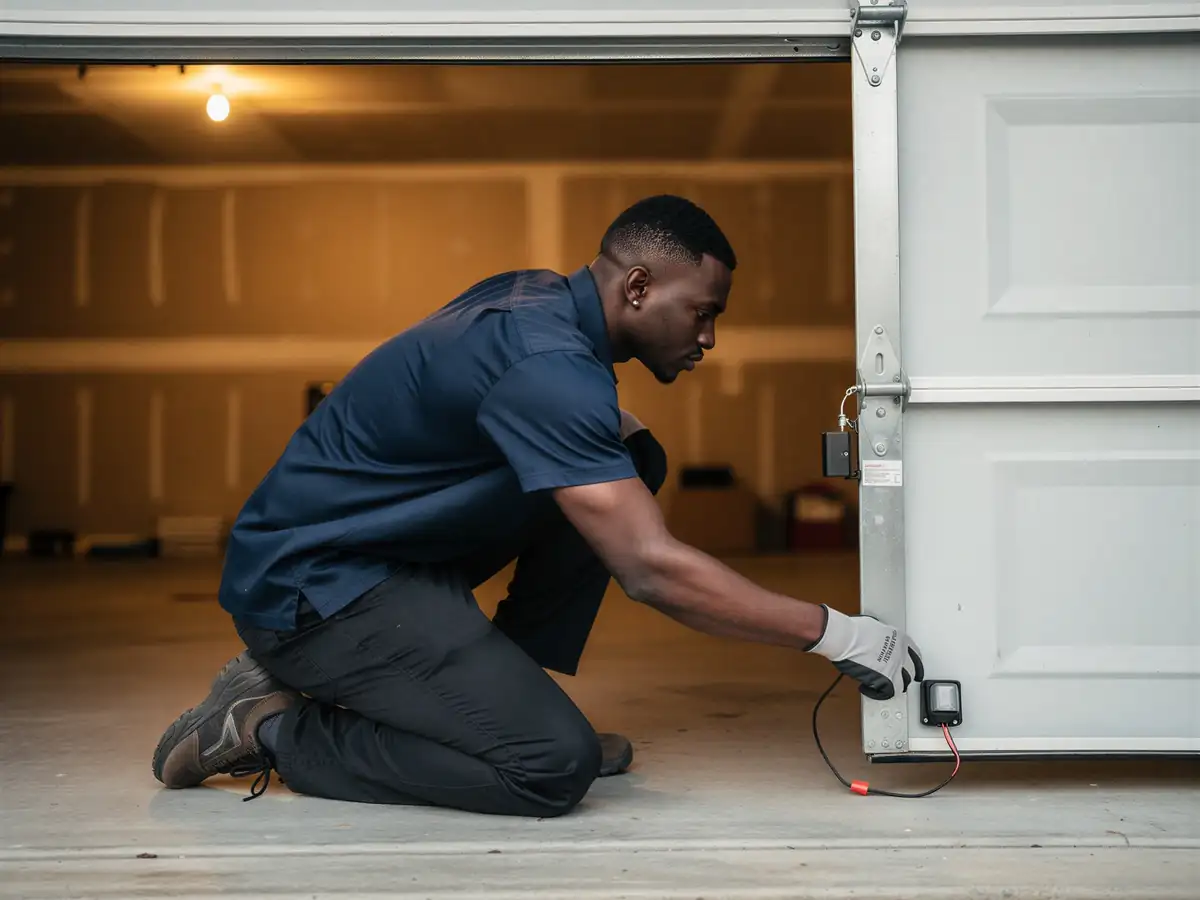
On a steel sectional door from the mid-1970s, panel replacement means pulling the damaged section without disturbing the spring tension on the rest of the door, unbolting the hinges and roller brackets, and fitting a section that matches the existing raised-panel pattern and width. Most of these doors are either a single-car 9-foot opening or a double at 16 feet, and the panel height has to match across every section or the door won't track straight.
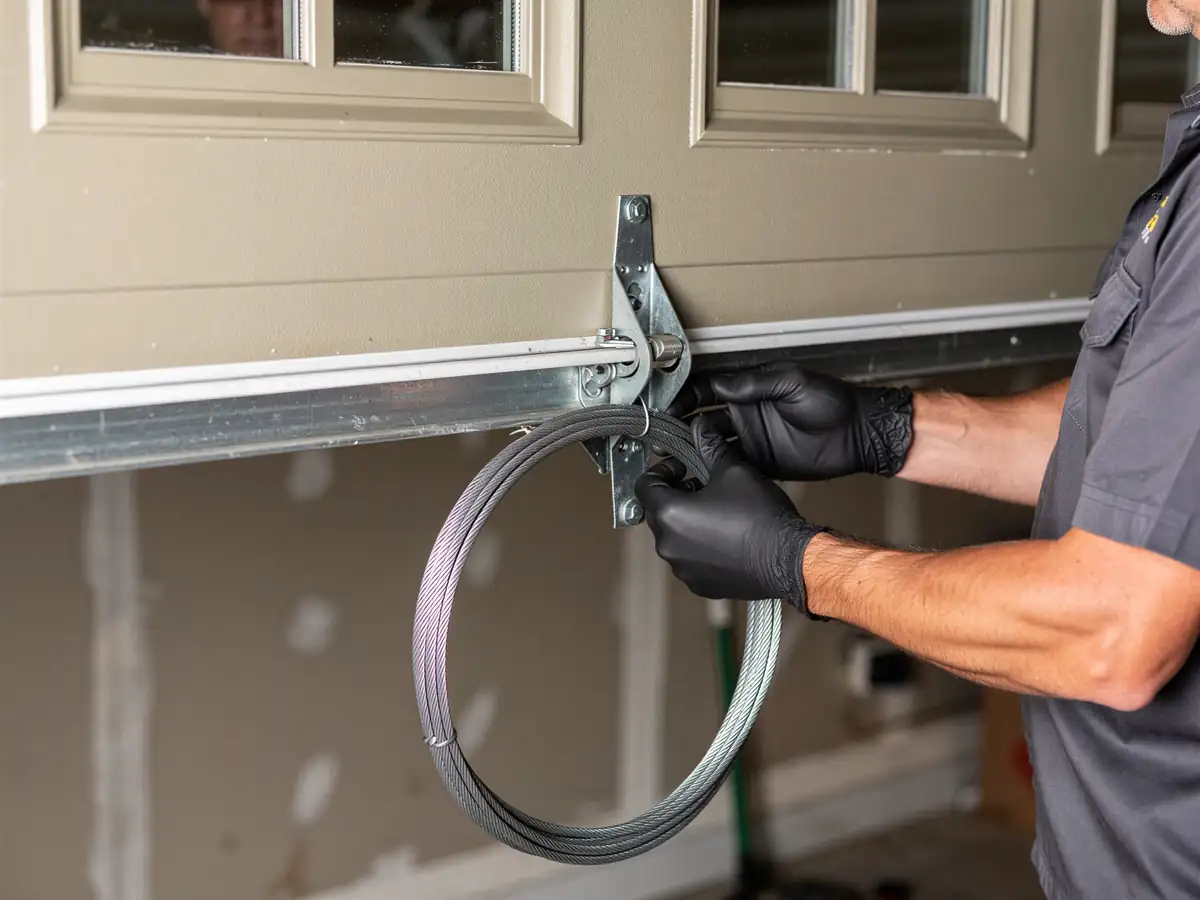
We also check the hardware around the damaged section - hinges flex and rollers wear unevenly when a panel's been cracked or bent for a while, since the door's been riding slightly off-true. Replacing just the panel without checking the hinge that bolts to it is how you end up back out here in six months for the same complaint. On older doors we also look for rust at the bottom corners, since that's usually a sign the whole section needs replacing rather than just patching the dent.
The Cost of This Job
We don't post a flat price here because panel cost swings with how close a match we can get to your door's existing style and whether the section has to be special-ordered versus pulled from common stock. What we can tell you is that in an area where median household income runs under $33,000, we try to steer folks toward the real choice in front of them: patch the one panel, or if two or more sections are already rusted or bent, put that money toward a full door instead of chasing a discontinued match section by section. That's a conversation we have on site, not over the phone.
What Causes It Around Here
With most houses here dating to the mid-1970s, the doors are old enough that the steel has had decades to pick up dents from basketballs, trailer hitches, and the occasional missed reverse out of the driveway. The region sits in a mild climate with occasional freeze, so panels don't crack from deep cold the way they might further north, but humidity and years of surface rust at the bottom edge are common on doors from this era that haven't been repainted. With only around 1,127 households in La Fayette, this isn't high call volume for us, but the door type and failure pattern repeats house to house because so much of the stock went up in the same few years.