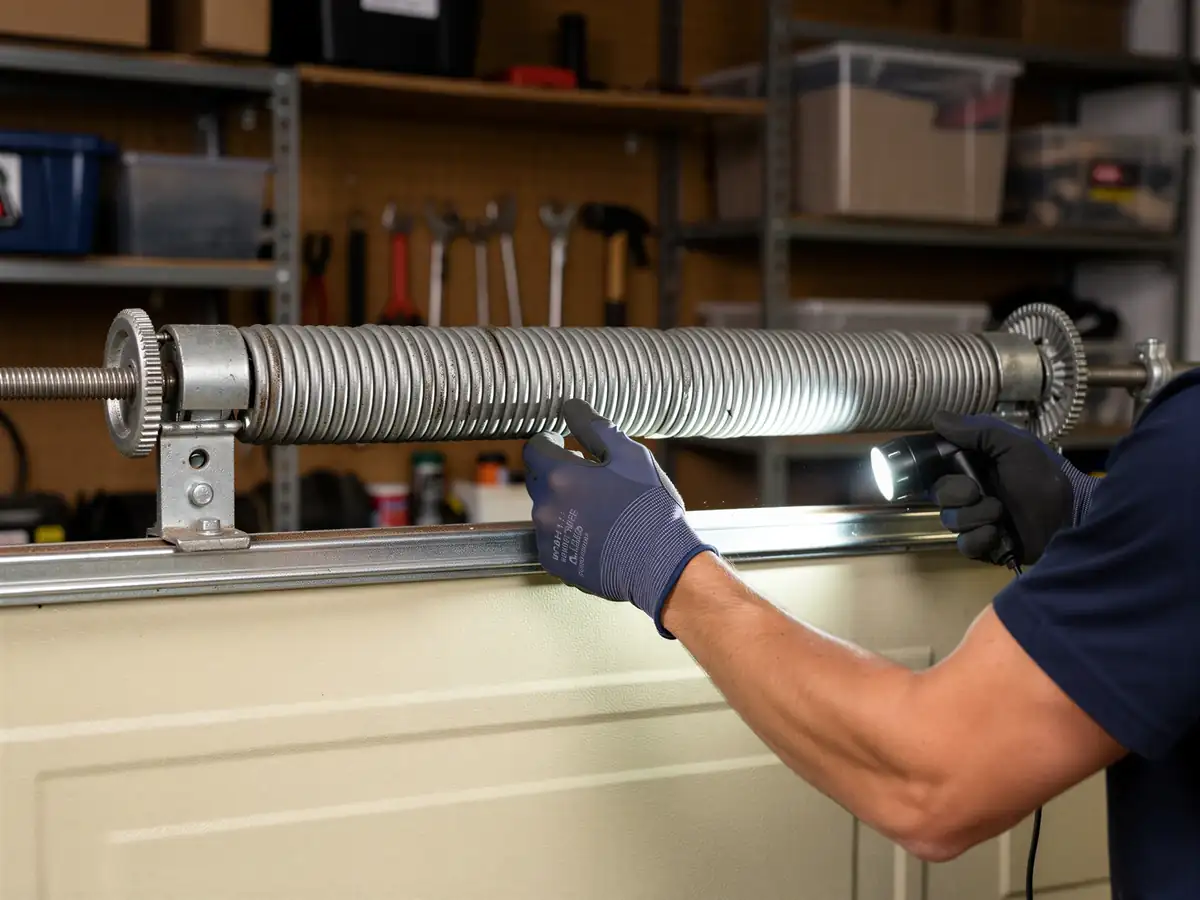
What the Repair Takes
Most of the broken-spring calls we get from Lanett involve torsion springs that have been on the door since the house was built. With a median build year of 1965, a lot of these garages still carry the first or second spring set ever installed, and that hardware is well past any reasonable service life. A torsion spring is rated in cycles, not years, but 1965 construction means decades of cycles on a spring nobody has looked at.
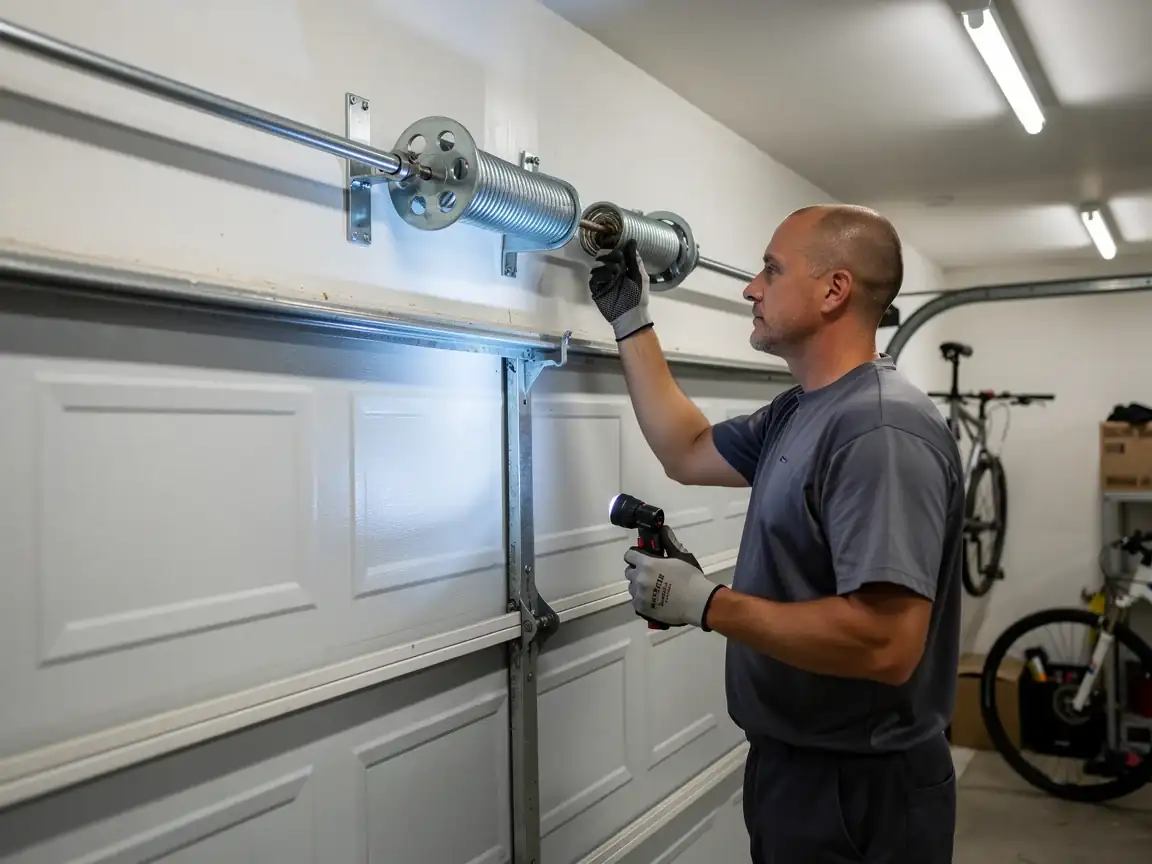
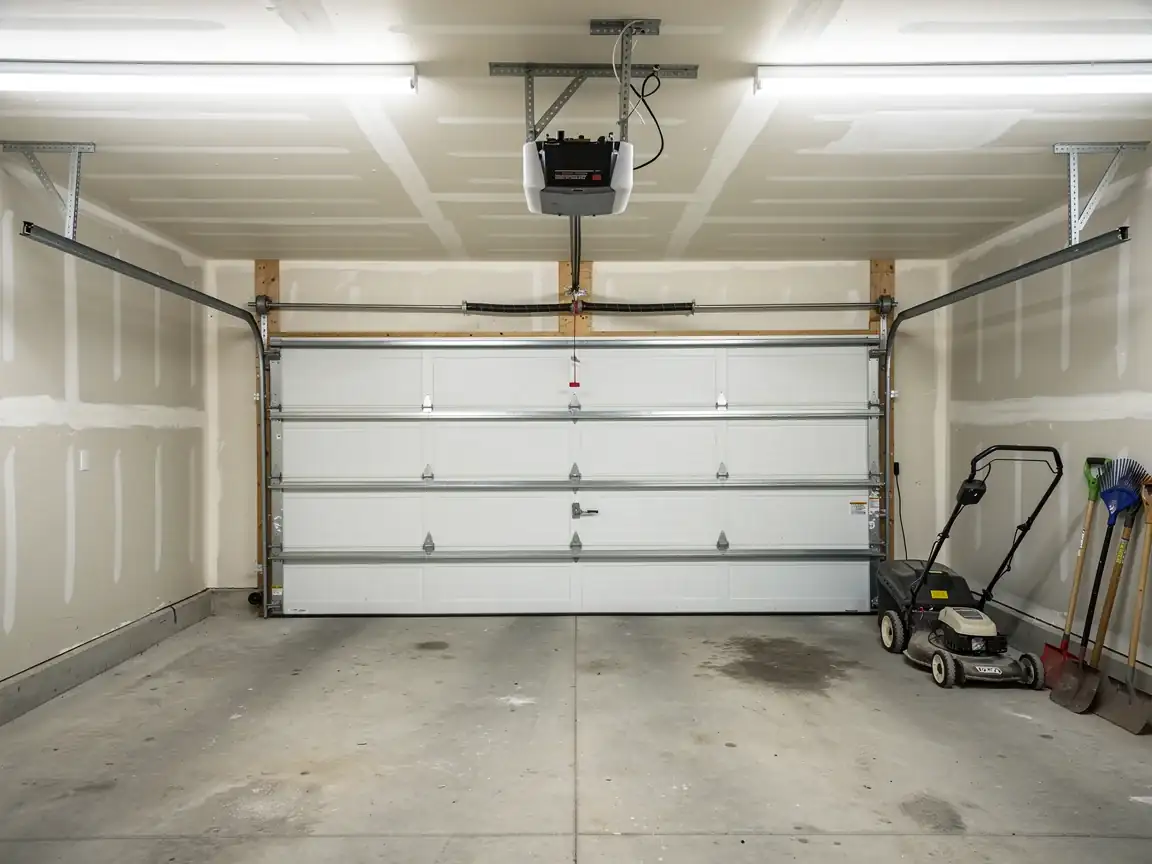
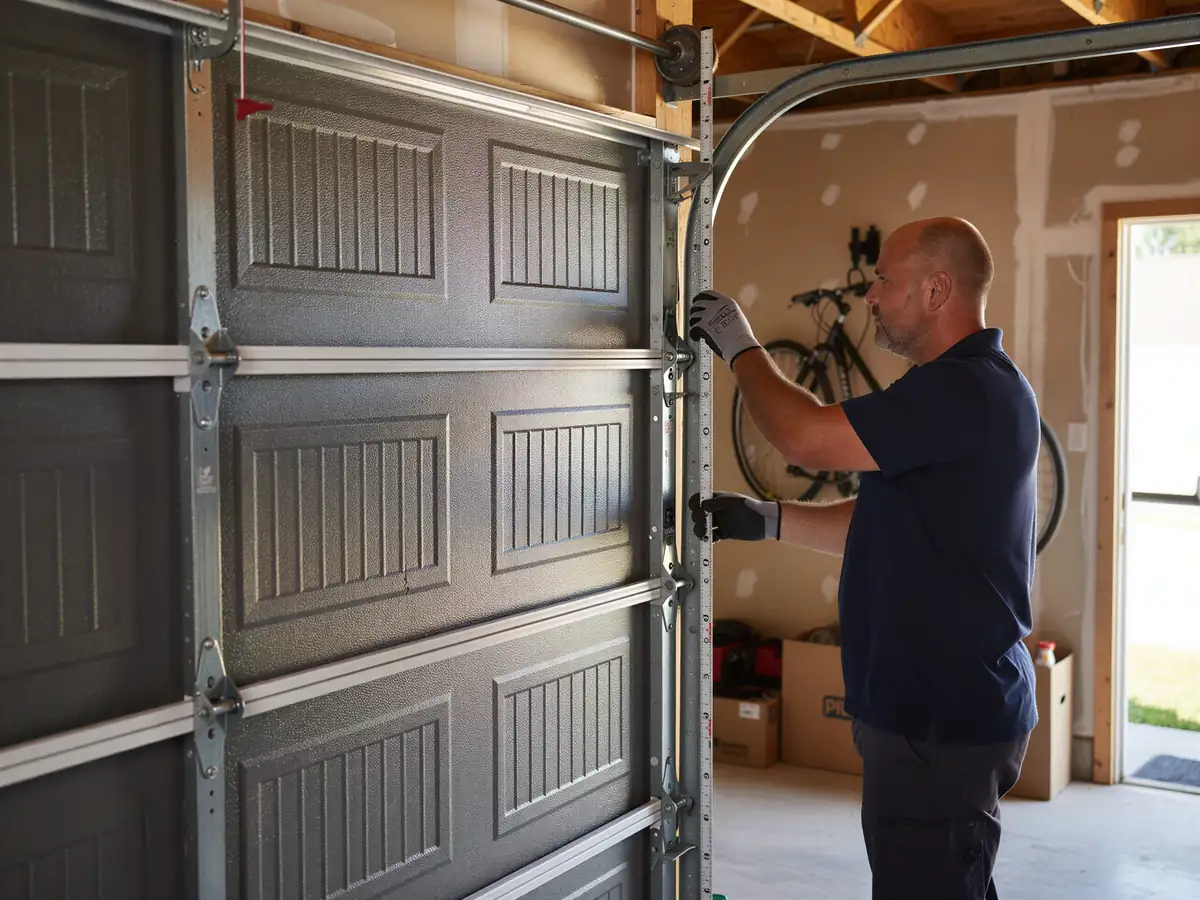
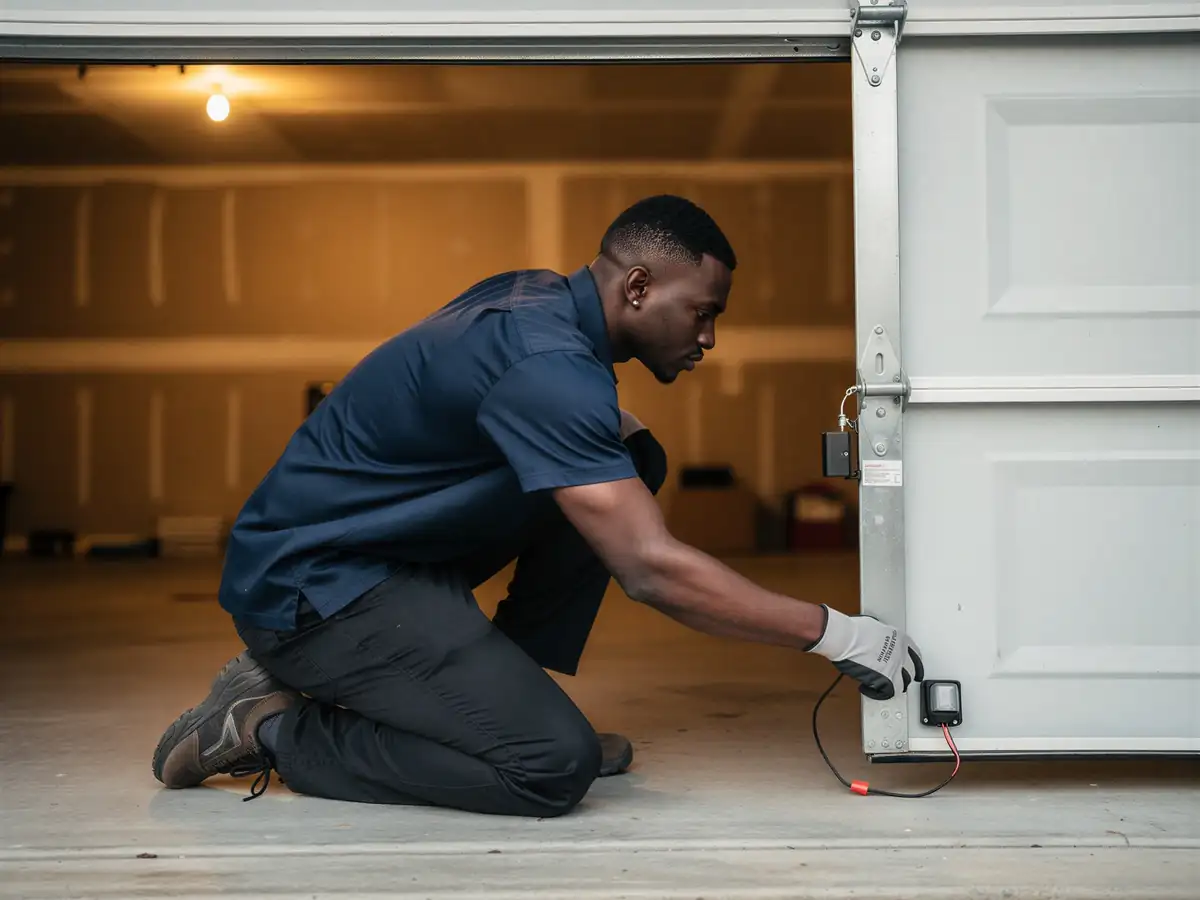
The job itself is straightforward once we're on site: unwind the old spring under controlled tension, measure the wire gauge and wind length against the drum and shaft, and install a matched pair sized to the door weight. On older one-piece or early sectional doors common to this build era, the drum and shaft can be undersized for a heavier replacement panel if the door was ever swapped out, so we check that before we quote a spring alone. We carry standard torsion and extension stock sized for residential doors; what we don't stock is anything custom-wound for a door that's been modified from its original spec, and that's the one job where we may need to order a part before we finish.
Where This Job Goes Sideways
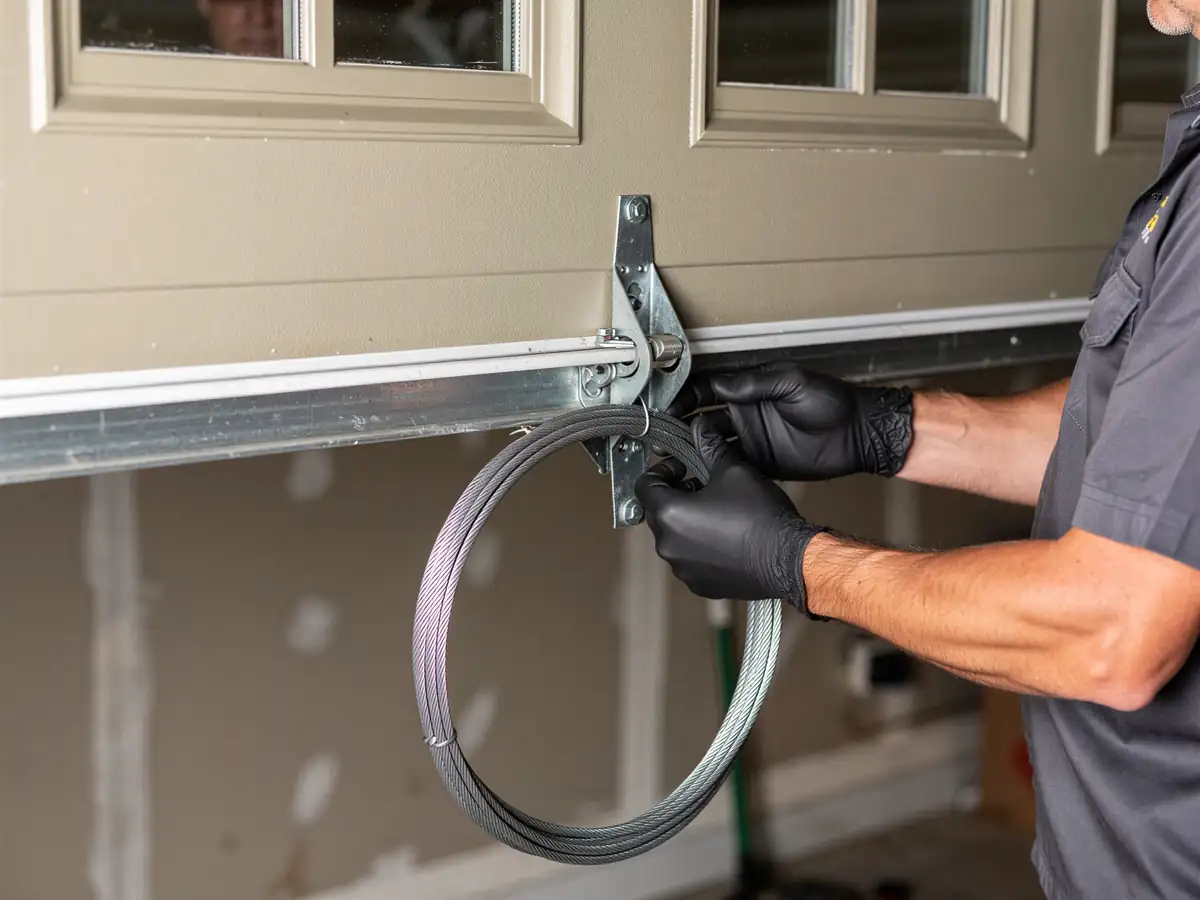
The failure mode that turns a spring call into something bigger is the cable. On a door running a 1965-vintage torsion setup, the cable has usually never been replaced either, and a spring snap under tension can fray or snap a cable in the same moment. We check both every time, not because it's an upsell, but because sending a homeowner off with a new spring on a frayed cable is how the next call turns into a dropped door.
The other sideways turn is the drum. Lanett's housing stock sits right at the start of the broader 1965-1991 range we see across this service area, which means some doors here have hardware a full generation older than what we find in newer pockets nearby. An old cast drum paired with a new spring can bind if the pitch doesn't match. We'd rather tell you upfront that the drum needs replacing too than have the new spring wear itself out against bad hardware in six months.
Getting It Booked In
We run this job out of Opelika, about 17 miles from Lanett
So we schedule spring calls here in blocks rather than one-off trips when we can. That doesn't change the repair itself, but it's worth knowing we're not based in town, and we don't carry every custom part on the truck for hardware that's been modified from stock.
- 17 miles
Median household income in Lanett sits at $42,415, lower than some of the other towns we cover from Opelika
And we quote the repair straight: spring pair, cable if it needs it, and labor, no bundled add-ons for parts that aren't failing. If your door is original to a 1965 build and the opener, track, and panel are all still sound, a spring repair is usually the right call rather than a full door replacement.
The Symptom
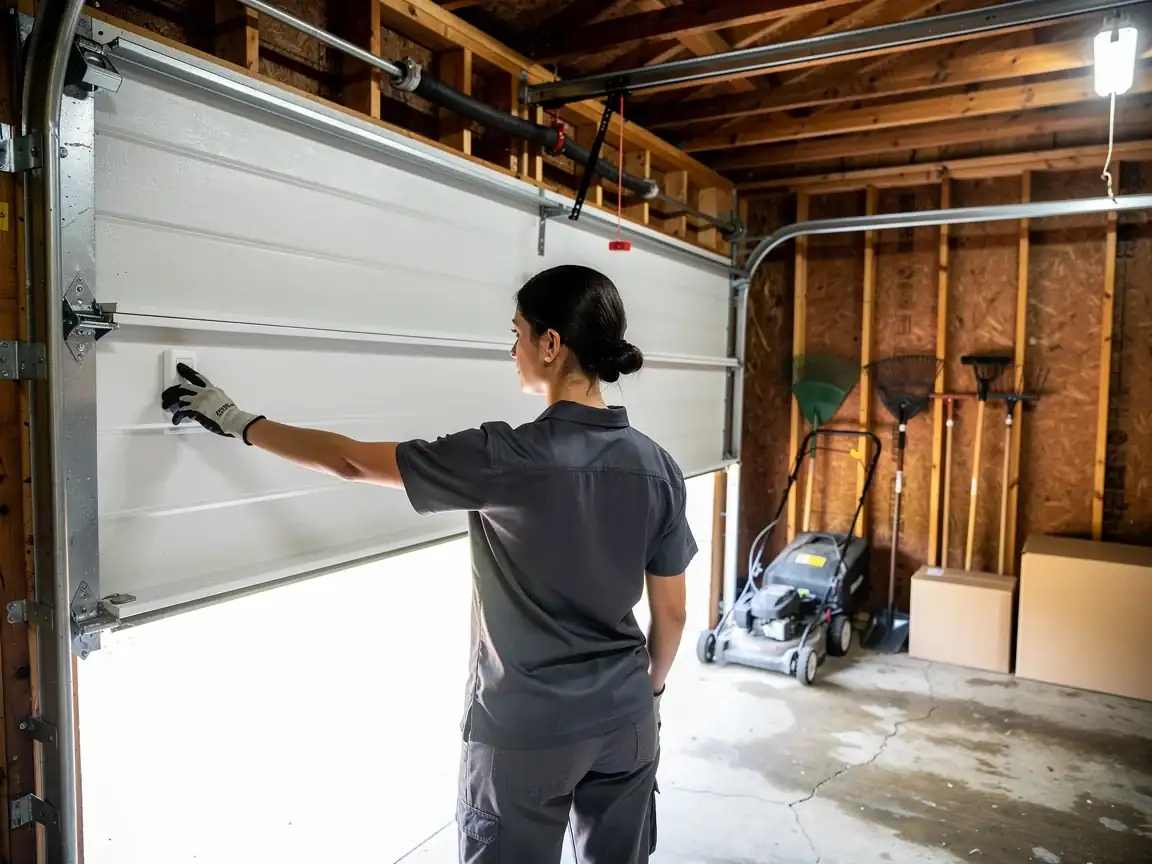
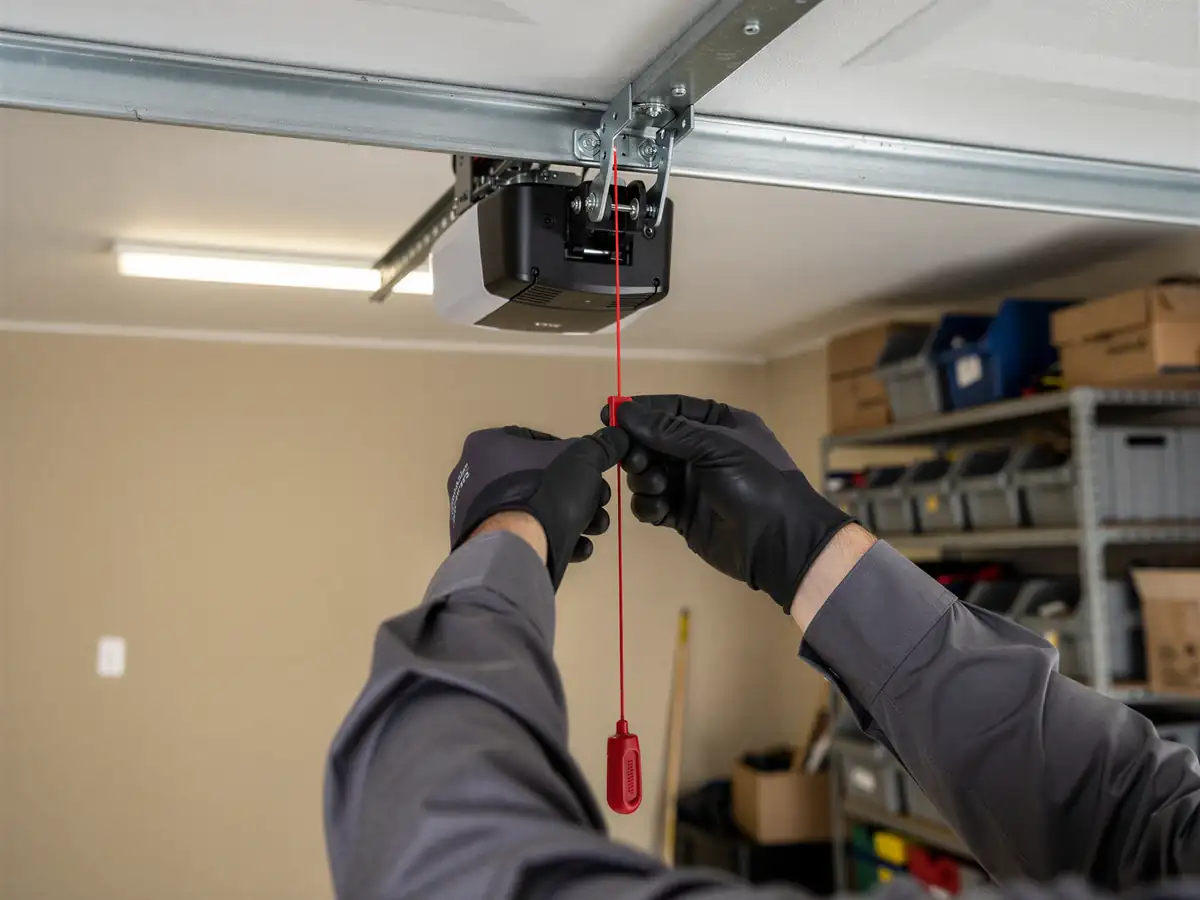
If the door won't lift, or it lifts a few inches and stalls, that's a broken or badly stretched spring, not an opener problem, even if the opener motor is straining audibly. A door that slams down fast instead of lowering under control is the same thing: no spring tension left to slow the panel.
One thing we see specifically on Lanett's older stock is a spring that hasn't broken outright but has lost enough tension over the decades that the door feels heavy and uneven lifting by hand. That's worth a call before it snaps outright, since a controlled replacement is a lot less work than one that lets go while the door's halfway up. With 2,336 households in Lanett and a housing stock that start in the mid-1960s, this is a repair we expect to keep seeing here for a while yet.